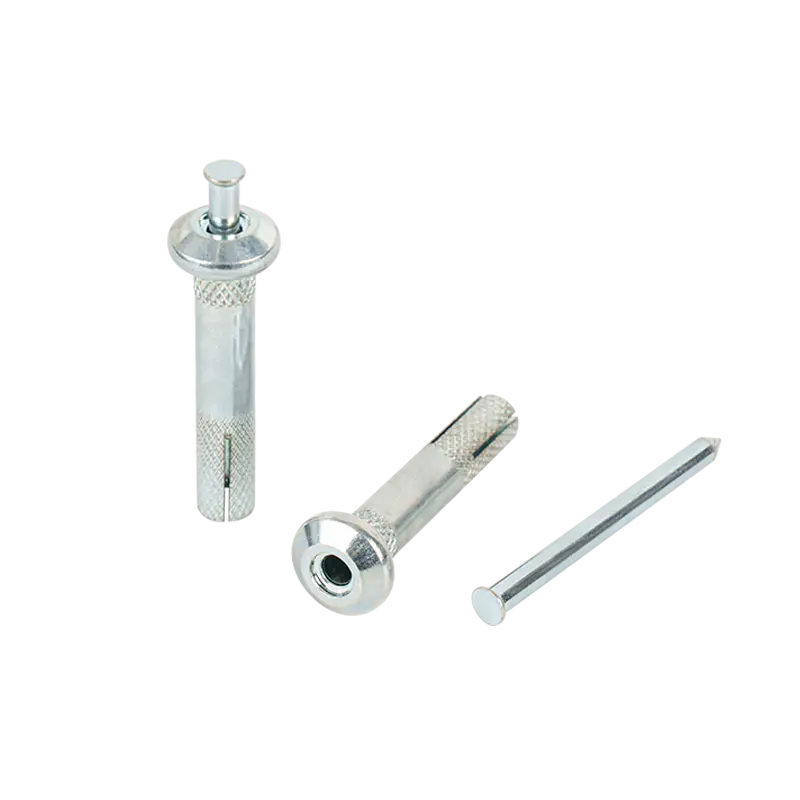
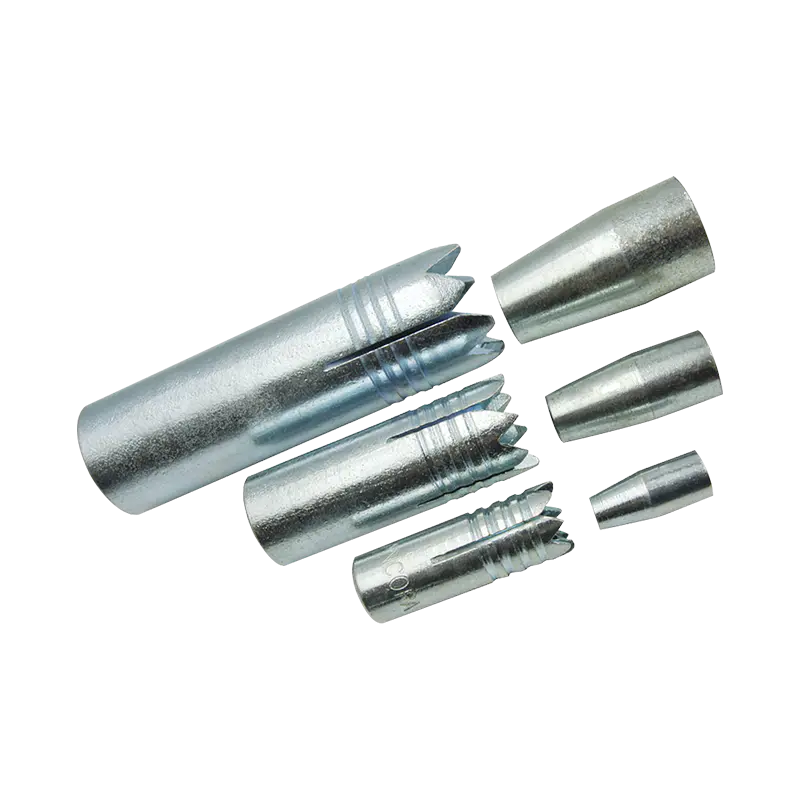
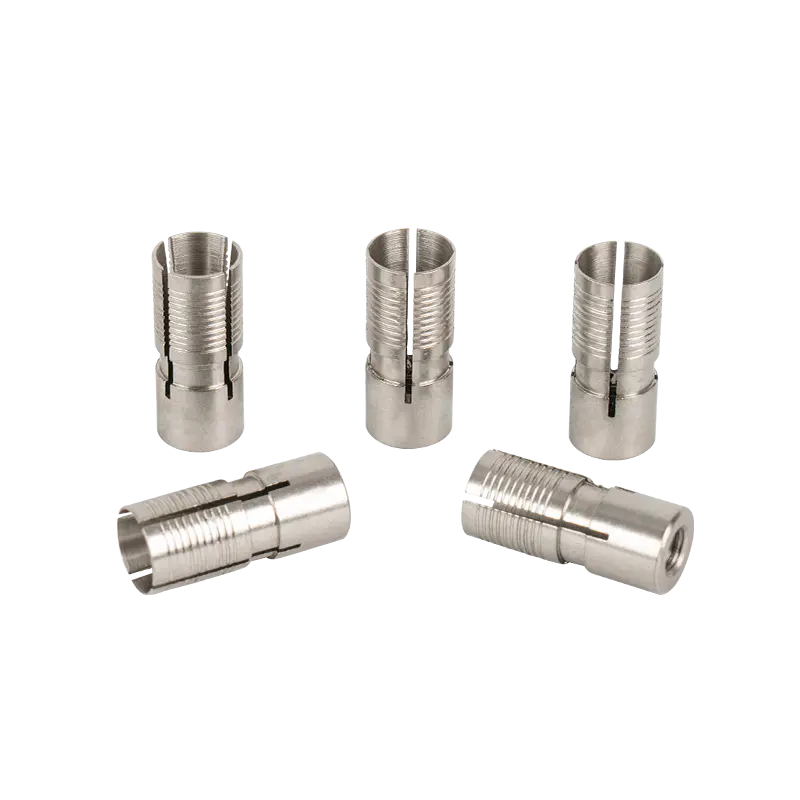
Short answer: Yes — Strike Anchor is fully compatible with concrete walls and a range of other solid substrates. Read on for a complete breakdown of compatible materials, installation guidance, comparisons, and frequently asked questions.
Strike Anchor — also known as a strike pin anchor or nail-in anchor — is one of the most widely used mechanical fastening systems in modern construction. Its single-strike installation mechanism makes it popular among contractors, engineers, and DIY enthusiasts alike. But before selecting Strike Anchor for your project, one of the most critical questions is: which substrates can it actually be installed in? This guide answers that question comprehensively.
What Is a Strike Anchor?
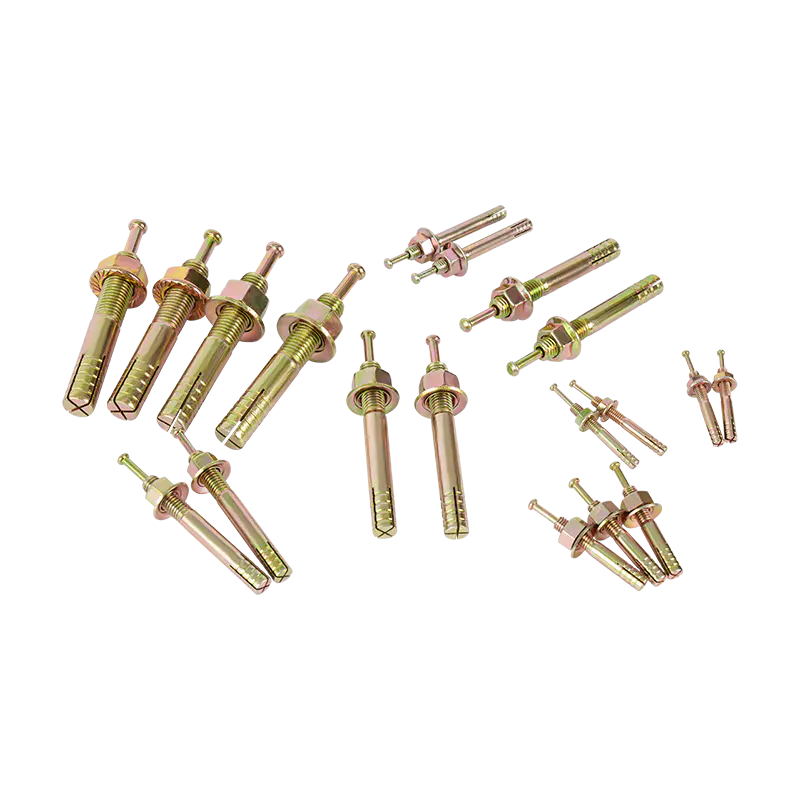
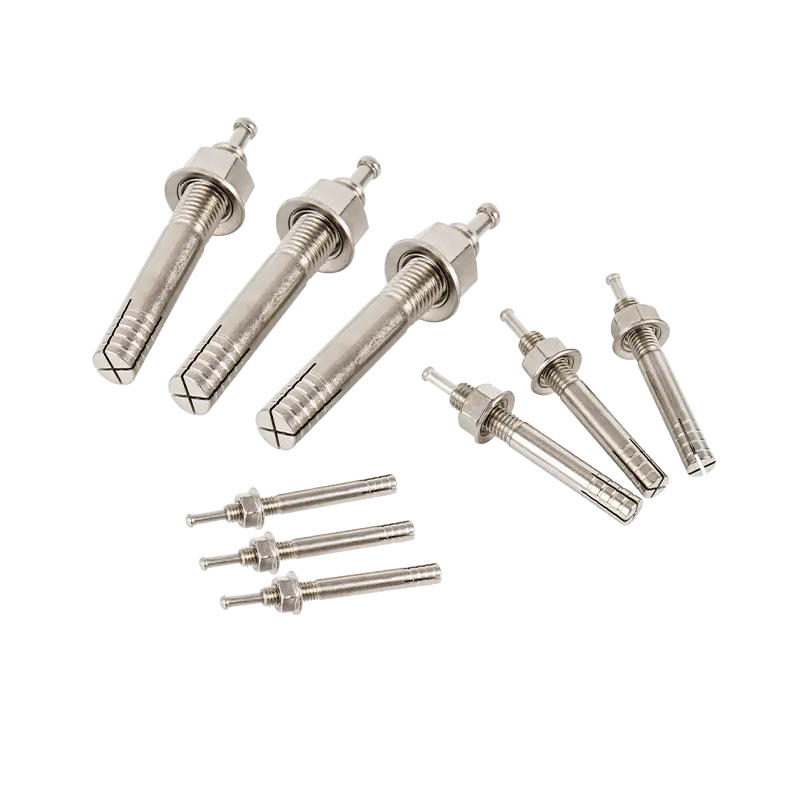
A Strike Anchor is a type of mechanical expansion anchor designed for fast, reliable installation into hard substrates. It consists of a zinc alloy or carbon steel sleeve with an internal expansion plug. When the pin is driven into the anchor body with a hammer, the sleeve expands outward to grip the substrate tightly — creating a strong, vibration-resistant hold.
Unlike adhesive anchors or chemical anchors, the Strike Anchor requires no curing time and no mixing of compounds. This makes it ideal for high-volume or time-sensitive installations where speed and reliability are equally important.
Which Substrates Can Strike Anchor Be Installed On?
Strike Anchor is engineered specifically for solid, dense base materials. Below is a detailed overview of the substrates it is compatible with:
1. Concrete (Normal-Weight)
Normal-weight concrete is the primary and most optimal substrate for Strike Anchor. Whether it is a poured slab, a precast panel, or a structural column, concrete provides the density and compressive strength needed for the anchor's expansion mechanism to function correctly. A minimum compressive strength of 2,000 psi (13.8 MPa) is typically recommended.
2. Concrete Walls
Concrete walls — including basement walls, retaining walls, shear walls, and foundation walls — are excellent candidates for Strike Anchor installation. The vertical application does not diminish the anchor's holding capacity as long as the wall thickness is adequate (typically a minimum of 3.5 inches / 90 mm) and the concrete is free of voids or honeycombing near the installation point.
3. Solid Masonry Block (CMU)
Concrete Masonry Units (CMU), also called cinder blocks or concrete blocks, can support Strike Anchor installations — provided the anchor is placed in the solid face shell of the block, not in a hollow core. Face-shell installation is critical; if the anchor is placed where the material is thin or hollow, the expansion force will crack the substrate rather than grip it.
4. Brick
Solid clay or sand-lime brick can accommodate Strike Anchor under the right conditions. The brick must be solid (not cored or hollow), and the compressive strength must be sufficient. Load-bearing applications in brick require additional engineering review.
5. Stone (Natural & Engineered)
Dense natural stone substrates such as granite, limestone, and sandstone can accept Strike Anchor installations where structural loads are light to moderate. Softer or more porous stones may not provide reliable holding values; always verify with a pull-out test before committing to this substrate.
6. Lightweight Concrete
Lightweight concrete (density below 115 pcf) can be used with Strike Anchor, but expected load values will be reduced compared to normal-weight concrete. Always reference the manufacturer's load tables for lightweight concrete specifications and apply an appropriate safety factor.
Substrate Compatibility Overview
Here is a structured overview of how Strike Anchor performs across common substrate types, from fully compatible to incompatible:
Excellent Compatibility
- Normal-weight concrete — High holding capacity. Requires minimum 2,000 psi compressive strength. The definitive Strike Anchor substrate.
- Concrete wall — High holding capacity. Minimum wall thickness of 90 mm recommended. Ideal for both tensile and shear load applications.
Good Compatibility
- Solid CMU block — Medium to high holding capacity. Must install in the solid face shell only; hollow cores will crack under expansion force.
- Solid brick — Medium holding capacity. Brick must be non-cored and non-hollow. Engineering review recommended for load-bearing applications.
Moderate Compatibility
- Dense natural stone (granite, limestone, sandstone) — Medium holding capacity for light to moderate loads. Always perform a pull-out test on porous or softer stone varieties.
Conditional Compatibility
- Lightweight concrete — Reduced holding capacity compared to normal-weight concrete. Always use the manufacturer's lightweight-specific load values and apply an appropriate safety factor.
Not Suitable
- Hollow block / hollow CMU — Expansion force cracks hollow core; no reliable holding capacity.
- Drywall / Plasterboard — Far too soft and brittle. Use toggle bolts or dedicated wall anchors instead.
- Wood / Timber — Screw-type fasteners are the correct choice for timber substrates.
- Metal substrates — Use threaded fasteners or weld studs; expansion anchors are not designed for metal.
- AAC / Aerated autoclaved concrete (Ytong) — Insufficient density for the Strike Anchor expansion mechanism to grip reliably.
Is a Concrete Wall Suitable for Strike Anchor? A Deep Dive
The answer is an unambiguous yes — a concrete wall is one of the most suitable substrates for Strike Anchor installation. Here is why:
Why Concrete Walls Work So Well
- Density and Hardness: Concrete walls provide the compressive resistance needed for the Strike Anchor sleeve to expand and lock in place without substrate deformation.
- Uniformity: Cast concrete offers consistent density throughout, reducing the risk of voids near the anchor hole.
- Moisture Tolerance: Galvanized or zinc-plated Strike Anchors resist corrosion even in slightly damp concrete environments such as basement walls or below-grade applications.
- Load Versatility: In concrete walls, Strike Anchor can handle both shear loads (parallel to the wall face) and tensile loads (perpendicular pull-out), making it suitable for a wide range of fixtures.
Common Applications on Concrete Walls
- Mounting electrical conduit brackets and cable trays
- Attaching pipe hangers and mechanical supports
- Securing shelving brackets, equipment frames, and sign supports
- Fastening formwork and temporary shoring components
- Installing partition wall tracks adjacent to concrete core walls
- Anchoring safety railings and barrier supports to parking structure walls
Important Considerations for Concrete Wall Installation
- Edge distance: Maintain a minimum edge distance of at least 5x the anchor diameter from any wall edge or corner to prevent concrete spalling.
- Spacing: When installing multiple Strike Anchors in a row, maintain minimum spacing of at least 10x the anchor diameter to avoid group effect reductions in load capacity.
- Hole depth: The drilled hole must meet or exceed the manufacturer's specified embedment depth — typically the full length of the anchor body plus a dust clearance allowance at the bottom.
- Cracked vs. uncracked concrete: Standard Strike Anchor products are rated for uncracked concrete. If the wall is subject to tensile stress zones or seismic loading, verify whether a cracked-concrete-rated version is required.
Substrates NOT Suitable for Strike Anchor
Understanding where Strike Anchor should not be used is equally important for safe, effective fastening:
- Hollow materials (hollow CMU, hollow brick, clay tile): the expansion force has no surrounding material to grip and will fracture the thin wall of the core.
- Drywall and plasterboard: far too soft and brittle; use dedicated wall anchors.
- Wood and engineered timber: screw-type anchors are the correct fastener family.
- Metal substrates: threaded fasteners or weld studs are appropriate; expansion anchors are not.
- Very low-strength concrete (below 1,500 psi): insufficient compressive strength for reliable expansion grip; use adhesive anchoring systems instead.
- Aerated autoclaved concrete (AAC) / Ytong blocks: the low density of AAC will not provide adequate resistance for the Strike Anchor expansion mechanism.
Step-by-Step: How to Install Strike Anchor in a Concrete Wall
- Select the correct size: Choose a Strike Anchor diameter and length appropriate for the fixture hole and required embedment depth in the concrete wall.
- Mark the drill point: Use a pencil or marker to indicate the exact anchor location. Confirm edge distance and spacing requirements are satisfied.
- Drill the hole: Using a hammer drill fitted with a carbide-tipped SDS bit of the correct diameter, drill the hole perpendicular to the wall surface to the full required depth. Never use a regular rotary drill — concrete requires hammer action.
- Clean the hole: Remove concrete dust from the hole using a blow-out bulb or compressed air. Dust accumulation at the hole bottom can prevent full embedment and reduce holding values.
- Insert the Strike Anchor: Push the Strike Anchor through the fixture hole and into the drilled hole until the flange is flush with the fixture surface.
- Drive the pin: Using a hammer, drive the expansion pin flush with the anchor head. The sleeve expands and grips the concrete wall.
- Verify installation: Confirm the anchor is fully seated and the fixture is secure. For critical applications, perform a torque verification or pull-out test per project specifications.
Choosing the Right Strike Anchor Size for Concrete Walls
Strike Anchor is available in a range of diameters — most commonly 1/4", 3/8", 1/2", and 5/8" (or metric equivalents: 6mm, 10mm, 12mm, 16mm). Selecting the correct size depends on the fixture hole diameter, required embedment depth, and the design load. Here is a practical breakdown:
- 1/4" (6mm) Strike Anchor — Best suited for light-duty applications such as cable trays, electrical conduit clips, and signage on concrete walls. Minimum embedment depth is approximately 1-1/8" (28mm), with tensile capacities typically in the range of 500–800 lbs (2.2–3.6 kN) in normal-weight concrete.
- 3/8" (10mm) Strike Anchor — Ideal for medium-duty work including conduit hangers, pipe support brackets, and equipment mounting frames. Minimum embedment depth is approximately 1-5/8" (41mm), with tensile capacities around 1,200–1,700 lbs (5.3–7.6 kN).
- 1/2" (12mm) Strike Anchor — The most widely used size for general mechanical and structural support on concrete walls. Suitable for pipe supports, HVAC brackets, and partition tracks. Minimum embedment depth is approximately 2-1/4" (57mm), with tensile capacities of 2,000–3,000 lbs (8.9–13.3 kN).
- 5/8" (16mm) Strike Anchor — For heavy-duty structural applications such as safety railings, large equipment mounts, and barrier supports. Minimum embedment depth is approximately 2-3/4" (70mm), with tensile capacities reaching 3,500–5,000 lbs (15.6–22.2 kN).
Note: Capacity values are approximate for normal-weight concrete at or above 3,000 psi. Always consult the manufacturer's published load tables and apply appropriate safety factors per local building code requirements.
Strike Anchor vs. Other Concrete Anchor Types: When to Use Which
Understanding how Strike Anchor compares to other anchor types helps you make the right specification decision for concrete wall applications. Each anchor type has a distinct profile of speed, capacity, and installation requirements:
Strike Anchor — Best for: Fast, high-volume concrete fastening
The Strike Anchor delivers very fast installation with medium-to-high load capacity. A single hammer blow sets the anchor permanently. Its limitation is that it requires a solid substrate and cannot be removed once installed. For the vast majority of mechanical, electrical, and general construction work on concrete walls, it is the most efficient choice.
Wedge Anchor — Best for: Heavy structural connections
Wedge anchors offer higher load capacities than Strike Anchors and are commonly specified for structural steel connections, equipment pads, and base plates. However, they require a torque wrench for installation verification, making the process slower and more labour-intensive. They are the preferred choice when loads exceed what a Strike Anchor can reliably deliver.
Sleeve Anchor — Best for: Through-bolt applications
Sleeve anchors expand along a longer portion of their sleeve, making them somewhat more tolerant of variable substrate conditions. They are also available in through-bolt configurations. Installation is more involved than a Strike Anchor, and they are generally chosen when fixture hole alignment and adjustment is needed before final tightening.
Drop-In Anchor — Best for: Flush concrete ceiling and overhead applications
Drop-in anchors are internally threaded and set flush with the concrete surface, making them ideal for overhead installations where a protruding anchor is unacceptable. They require a dedicated setting tool and must be installed before any fixtures are attached — making them a pre-installation anchor rather than a retrofit solution.
Chemical / Adhesive Anchor — Best for: Seismic, critical, and very high-load applications
Chemical anchors offer the highest load capacities and are the specified solution for seismic-critical connections and structural elements. They work in both cracked and uncracked concrete and can accommodate larger embedment depths. The trade-off is significant: they require precise hole cleaning, mixing, and a mandatory cure time that may range from minutes to hours depending on temperature.
Concrete Screw Anchor — Best for: Removable or temporary fastenings
Concrete screw anchors are the only standard anchor type that can be fully removed and reused. They thread directly into a drilled hole without expansion, making them ideal where the fixture may need to be relocated. Load capacity is lower than a Strike Anchor of equivalent diameter, so they are best reserved for lighter-duty or temporary applications.
In summary, the Strike Anchor excels when you need fast, reliable, permanent installation in concrete or masonry walls within the medium-to-high load range. For extreme structural or seismic-critical loads, a chemical anchor may be more appropriate — but for the broad middle ground of construction fastening tasks, Strike Anchor remains the preferred choice.
Strike Anchor Material Options for Different Environments
When installing Strike Anchors in concrete walls, the environmental conditions of the installation site will dictate the correct material choice:
- Zinc alloy (standard): Suitable for interior, dry concrete wall applications. Cost-effective for non-corrosive environments.
- Zinc-plated carbon steel: Enhanced corrosion resistance over bare zinc alloy. Suitable for interior applications with occasional moisture exposure.
- Hot-dip galvanized: For exterior concrete walls, retaining walls, or environments with persistent moisture or mild chemical exposure.
- Stainless steel (Grade 304 / 316): For coastal environments, marine structures, chemical plants, food processing facilities, or anywhere chloride exposure is present. Grade 316 offers the highest corrosion resistance of standard options.
Frequently Asked Questions (FAQ)
Q1: Can Strike Anchor be used in reinforced concrete walls?
Yes. Strike Anchor can be installed in reinforced concrete walls. However, care must be taken to avoid drilling into existing reinforcement bars (rebar). Use a rebar locator or cover meter before drilling to confirm hole placement does not intersect structural steel. Drilling through rebar will damage the drill bit, compromise the structural integrity of the anchor hole, and may violate engineering specifications.
Q2: Can Strike Anchor be removed after installation?
Strike Anchor is a permanent fastener — once installed, the expansion sleeve cannot be retracted. The bolt or threaded stud can be removed, but the anchor body remains permanently embedded in the concrete. If a removable anchor is required, consider using a concrete screw anchor instead.
Q3: What drill bit should I use for Strike Anchor installation in concrete?
Always use a carbide-tipped SDS or SDS-Plus hammer drill bit that matches the anchor's specified hole diameter exactly. Using an oversized bit will result in insufficient expansion grip and drastically reduced load capacity. Using an undersized bit will prevent anchor insertion and may damage the anchor or the concrete wall.
Q4: How deep does the hole need to be for Strike Anchor in a concrete wall?
The hole depth must equal the full length of the Strike Anchor body plus a minimum of 1/2" (12mm) of additional depth to accommodate concrete dust at the bottom (the "dust plug allowance"). Insufficient hole depth will prevent the anchor from reaching full embedment, and the pin will not be able to be driven flush — leaving the anchor in a partially expanded, weakened state.
Q5: Can Strike Anchor be used in wet or submerged concrete wall conditions?
Standard zinc-alloy or zinc-plated Strike Anchors are not recommended for permanently submerged applications. For below-waterline or continuously wet concrete walls, specify stainless steel Grade 316 Strike Anchors and confirm compatibility with site-specific water chemistry. Always consult the manufacturer's technical data sheet for wet environment ratings.
Q6: How many Strike Anchors do I need, and how far apart should they be spaced?
The number of anchors required depends on the total load and each anchor's rated capacity in your specific concrete substrate. When installing multiple Strike Anchors in a concrete wall, maintain a minimum center-to-center spacing of 10x the anchor diameter and a minimum edge distance of 5x the anchor diameter from any free edge. If closer spacing is required, apply group-effect reduction factors per the manufacturer's technical documentation.
Q7: Is Strike Anchor code-approved for use in concrete walls?
Many Strike Anchor products carry approvals or listings from recognized standards bodies such as ICC-ES (International Code Council Evaluation Service) in North America or ETA (European Technical Assessment) in Europe. Always verify that the specific Strike Anchor product you are specifying carries the relevant approval for your jurisdiction and application type. Critical life-safety or seismic applications will require specific code-listed anchors.
Summary: Key Takeaways on Strike Anchor Substrate Compatibility
- Strike Anchor is fully compatible with concrete walls, normal-weight concrete slabs, solid CMU block, solid brick, and dense natural stone.
- It is not suitable for hollow substrates, drywall, wood, metal, AAC blocks, or very low-strength concrete.
- Concrete walls are among the best substrates for Strike Anchor due to their density, uniformity, and compressive strength.
- Always respect minimum embedment depth, edge distance, and spacing requirements to ensure full load capacity.
- Select the correct material grade — zinc alloy for dry interiors, stainless steel 316 for corrosive or wet environments.
- For high-load structural or seismic applications, verify that the Strike Anchor product holds the appropriate code approvals for your jurisdiction.
Whether you are a contractor installing mechanical supports in a reinforced concrete core wall, or a facilities manager mounting equipment brackets in a basement, Strike Anchor delivers the combination of speed, strength, and reliability that solid concrete substrates demand. Specify the right size, the right material, and follow correct installation technique — and your Strike Anchor will provide decades of secure, maintenance-free performance.

 English
 日本語
日本語