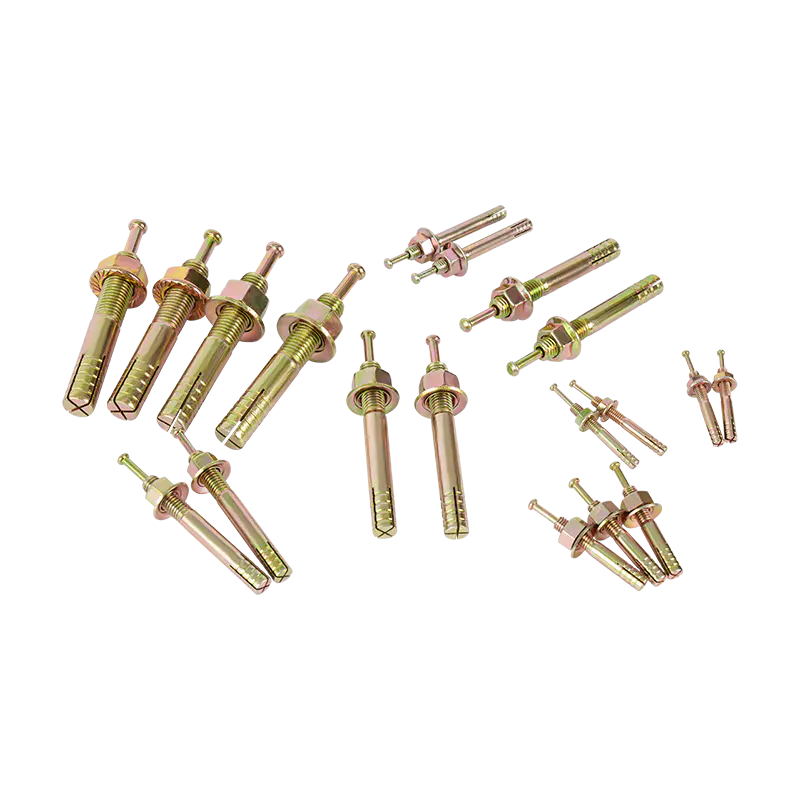
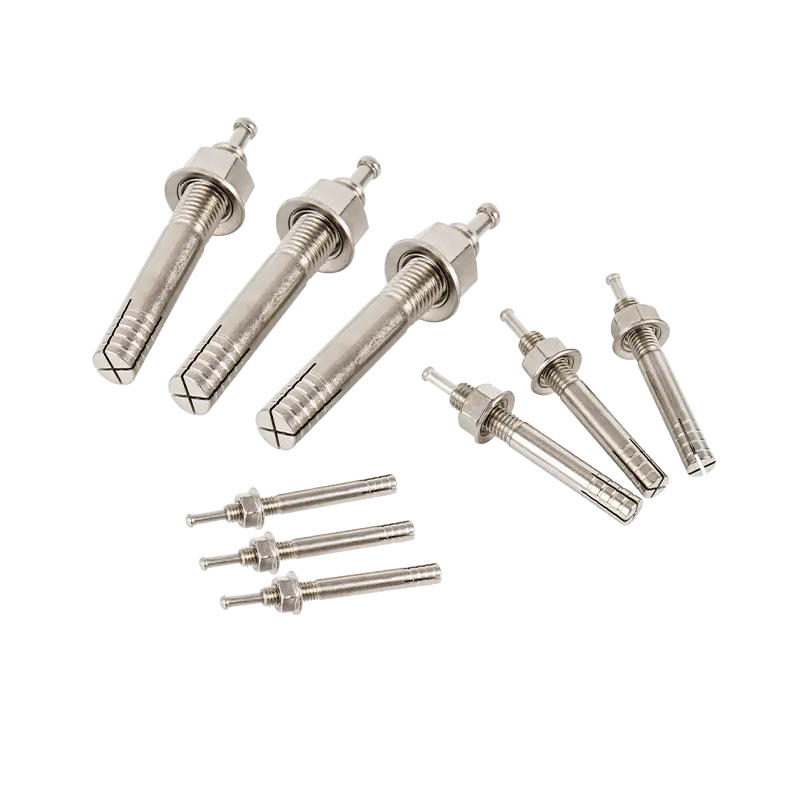
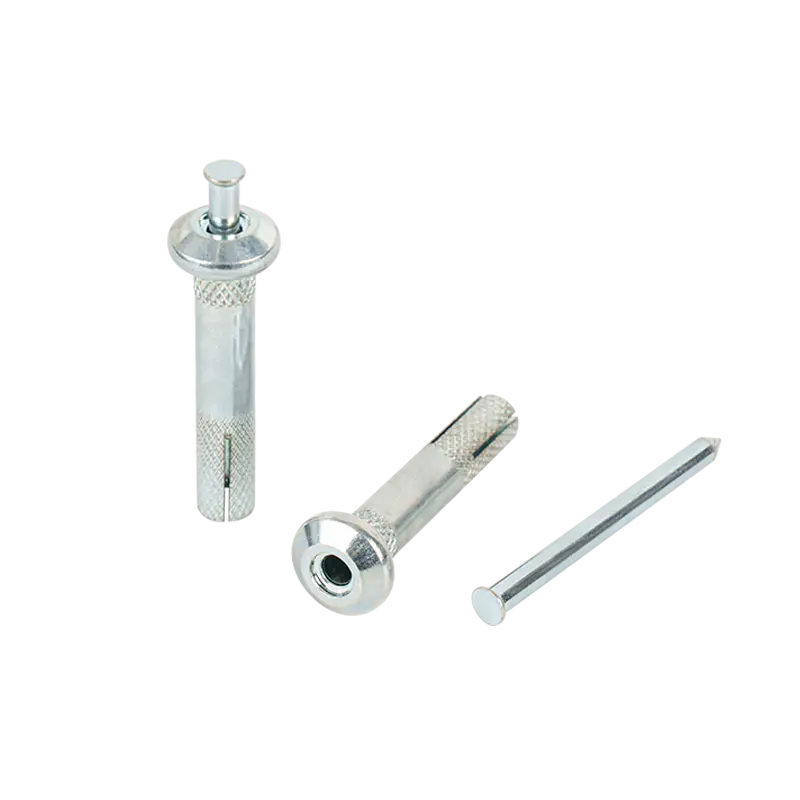
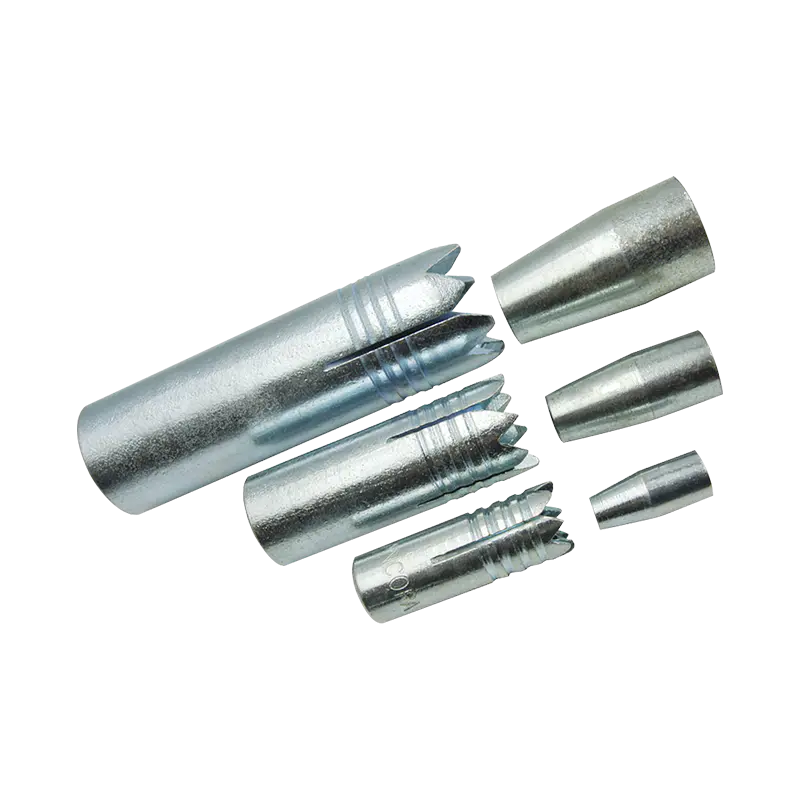
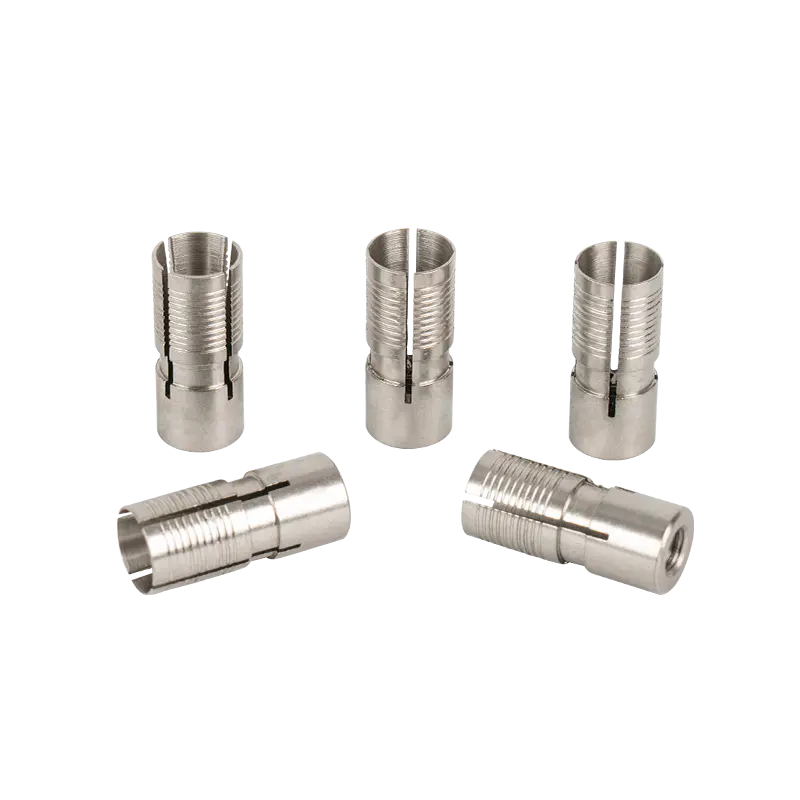
A Strike Anchor works by expanding a split sleeve or segmented body radially outward against the walls of a drilled hole when a bolt or rod is driven into it, creating a powerful mechanical interlock with the base material. Unlike friction-based fasteners that rely solely on surface pressure, the Strike Anchor generates holding force through a combination of mechanical expansion, wedge-locking geometry, and substrate engagement — making it one of the most reliable anchoring solutions available for concrete, masonry, and stone applications.
What Is a Strike Anchor?
A Strike Anchor — also commonly called a hammer-set anchor or nail-in anchor — is a pre-assembled, single-component fastener designed for rapid installation into solid base materials such as concrete, brick, and block. The fastener consists of two primary parts:
- Expansion Sleeve: A cylindrical, slotted metal tube that surrounds the central expander.
- Expander Plug (Nail): A hardened steel nail or pin that, when driven flush, forces the sleeve outward against the hole wall.
The genius of the Strike Anchor design lies in its one-step installation: drill a hole, insert the anchor, and strike the nail with a hammer. Within seconds, the fastener is fully set — no torque wrenches, no chemical mixing, no curing time.
The Mechanics Behind Strike Anchor Holding Power
Understanding why a Strike Anchor provides superior holding power requires a closer look at the physics involved during and after installation.
Step 1 — Hole Preparation
A hole is drilled into the base material using a carbide-tipped masonry bit. The hole diameter must precisely match the anchor's nominal diameter — typically within ±0.5 mm. This tight tolerance is critical: an oversized hole reduces expansion contact area and weakens holding capacity, while an undersized hole prevents proper seating.
Step 2 — Anchor Insertion
The Strike Anchor is inserted into the hole with the nail head protruding. At this stage, the sleeve sits loosely in the hole. The expander plug is positioned within the sleeve, slightly recessed at the bottom end.
Step 3 — Strike Setting
When the nail is struck with a hammer, the expander plug is driven downward through the sleeve. The tapered geometry of the plug forces the slotted sleeve segments to splay outward — a process called radial expansion. The expanding segments bite into the substrate, creating an interference fit that resists pullout forces.
Step 4 — Load Transfer Mechanism
Once set, the Strike Anchor transfers applied loads through two primary mechanisms:
- Friction Force: The radial pressure exerted by the expanded sleeve against the hole wall generates significant frictional resistance.
- Mechanical Interlock: The expanded sleeve segments embed into minor surface irregularities in the substrate, creating a positive mechanical lock that remains effective even under dynamic or vibrating loads.
Key Factors That Influence Strike Anchor Holding Strength
Not all Strike Anchor installations deliver the same performance. Several variables directly affect the final holding capacity:
1. Base Material Strength
The compressive strength of the substrate (measured in psi or MPa) is the single most important variable. A Strike Anchor installed in 4,000 psi concrete will achieve significantly higher pullout values than the same anchor in 2,000 psi concrete or lightweight block. Always verify substrate class before specifying anchor size.
2. Anchor Diameter and Embedment Depth
Larger-diameter Strike Anchors provide greater surface contact area during expansion, directly increasing holding capacity. Similarly, deeper embedment increases the shear cone breakout area within the concrete, improving resistance to both tensile and shear loading.
3. Hole Quality
Clean, round, properly sized holes are essential. Dust and debris left in the hole act as a lubricant, reducing friction and preventing full sleeve expansion. Always clean drilled holes with compressed air or a blow-out bulb prior to anchor insertion.
4. Edge and Spacing Distances
Installing a Strike Anchor too close to a concrete edge or to adjacent anchors can cause premature concrete breakout failure. Minimum edge distances (typically 5× the anchor diameter) and center-to-center spacing requirements (typically 10× the anchor diameter) must be respected per engineering guidelines.
5. Proper Strike Setting
The nail must be fully driven flush with the sleeve top. Partial setting leaves the expander plug incompletely advanced, resulting in an under-expanded sleeve and reduced holding performance. Use a solid hammer strike — do not use impact drivers or air tools unless the manufacturer specifically permits it.
Common Applications for Strike Anchors
The Strike Anchor is used across a broad spectrum of construction, industrial, and commercial applications. Its unique combination of speed and reliability makes it a preferred choice for:
- Electrical conduit and cable tray support — Fast attachment of hangers and brackets to concrete ceilings and walls
- HVAC duct hangers — Overhead support systems requiring quick, repeated installation
- Pipe hangers and plumbing supports — Light- to medium-load suspension in masonry environments
- Signage and display mounting — Indoor and outdoor signs attached to concrete or brick facades
- Light fixture mounting — Parking garage, warehouse, and industrial facility lighting
- Guardrails and barriers — Low-rise safety rail attachment in controlled-load environments
- Shelving and rack systems — Retail, warehouse, and storage installations
- Framing and furring channels — Metal stud track attachment to concrete block walls
Installation Best Practices for Maximum Holding Power
Following correct installation procedures is non-negotiable for achieving rated Strike Anchor performance. Below is a step-by-step best-practice guide:
- Select the correct anchor size — Match diameter and length to the load requirement, fixture thickness, and substrate type per the load table.
- Use the correct drill bit — Carbide-tipped masonry bits only. Never use SDS bits without confirming diameter tolerance compliance.
- Drill to the correct depth — Minimum hole depth = anchor embedment + 1/2 in clearance to avoid bottoming.
- Clean the hole thoroughly — Blow out all dust with compressed air; brush if necessary.
- Insert the anchor flush — Seat the anchor so its top sits flush with or just below the fixture surface.
- Strike the nail completely — Use a standard hammer (16–20 oz) and drive the nail until it is fully flush. A single firm strike series is preferred over repeated light taps.
- Inspect the set — Visually confirm the nail head is flush and the sleeve top is undamaged. Any mushroomed or split sleeve requires replacement.
Frequently Asked Questions About Strike Anchors
Q: Can a Strike Anchor be removed after installation?
Once set, a Strike Anchor is considered a permanent fastener. The expanded sleeve cannot be collapsed back to its original diameter. Removal typically requires cutting the nail flush and leaving the sleeve in place, or drilling out the anchor entirely — a process that may damage the surrounding substrate. For applications requiring future removal, consider a bolt-type or screw anchor instead.
Q: Are Strike Anchors suitable for cracked concrete?
Standard Strike Anchors are not rated for cracked concrete. The expansion mechanism depends on the substrate remaining intact around the anchor. In cracked concrete, the crack can propagate or open further, reducing the confining pressure on the sleeve and dramatically lowering holding capacity. Use specifically engineered cracked-concrete anchors for those conditions.
Q: How many strikes does it take to fully set a Strike Anchor?
The number of hammer blows varies by anchor size and substrate hardness, but the key indicator is nail flush seating. The nail should be driven until its head is flush with or slightly below the sleeve top. In typical 3,000–4,000 psi concrete, this generally requires 3–6 firm hammer strikes with a 16 oz or heavier hammer.
Q: Can Strike Anchors be used in hollow block or CMU (concrete masonry unit)?
Strike Anchors can be used in solid CMU or the solid face shells of hollow block, provided the embedment depth does not exceed the face shell thickness. Installing into the hollow void of a CMU block results in zero expansion capability and complete failure of the anchor. Always verify the thickness of the solid portion before installation.
Q: What is the difference between a Strike Anchor and a hammer drive anchor?
The terms Strike Anchor and hammer drive anchor are often used interchangeably and generally refer to the same product category — a pre-assembled, nail-driven expansion fastener. Some manufacturers differentiate by sleeve design (fully slotted vs. partially slotted) or nail geometry, but the fundamental operating principle is identical across the category.
Q: What happens if the nail is not driven flush?
An incompletely set Strike Anchor has a partially expanded sleeve that does not generate full radial force against the hole wall. The result is a significant — sometimes 40–60% — reduction in tensile and shear capacity compared to rated values. Always verify nail seating before loading the anchor.
Q: Do Strike Anchors require any torque after installation?
No. The Strike Anchor is a non-torque-controlled fastener. Its expansion is achieved entirely by the axial driving force of the nail. This is one of its primary installation advantages — no torque wrench is needed, and there is no risk of over-torquing that could fracture the surrounding concrete.
Q: Are Strike Anchors code-compliant for structural applications?
Strike Anchors from reputable manufacturers carry ICC-ES (International Code Council Evaluation Service) reports or equivalent certifications that provide tabulated design values for use under building codes such as ACI 318. For structural or life-safety applications, always verify that the product used carries current code-compliant certification and apply appropriate safety factors.
Why the Strike Anchor Outperforms Friction-Only Solutions
The core advantage of the Strike Anchor over simple friction fasteners (such as plastic wall plugs or friction fit pins) is the active mechanical engagement it creates with the substrate. Friction-only fasteners depend entirely on surface-to-surface contact force — a force that diminishes over time through vibration, thermal cycling, and material creep.
The Strike Anchor, by contrast, achieves a three-part mechanical advantage:
- Radial preload: The expanded sleeve maintains continuous outward pressure against the hole wall, even under load reversal.
- Wedge lock: The expander plug cannot retract once driven, preventing sleeve contraction and maintaining consistent radial force indefinitely.
- Substrate keying: Expansion forces the sleeve segments into surface micro-features of the drilled hole, creating a positive mechanical interlock that resists dynamic loads far more effectively than friction alone.
This is why Strike Anchors are trusted in mechanical, electrical, and structural applications where long-term fastener reliability is essential — from busy manufacturing facilities subject to constant vibration, to fire suppression pipe hangers where anchor failure is not an option.
Conclusion: Why the Strike Anchor Remains a Go-To Fastening Solution
The Strike Anchor has remained a staple of professional construction and maintenance for decades — and for very good reason. Its mechanics are straightforward, its installation is fast, and its performance is predictable when installed correctly. The combination of radial expansion, wedge-lock geometry, and substrate interlock delivers a holding power that is both immediately available (no curing time) and durable over the long term.
For contractors, engineers, and maintenance professionals who need a reliable, code-compliant, cost-effective fastener for concrete and masonry, the Strike Anchor continues to deliver results. By understanding the mechanics behind its expansion behavior and following correct installation procedures, users can fully realize the anchor's rated performance and build fastening systems they can trust.
Whether supporting electrical conduit on a commercial ceiling, securing pipe hangers in a plant utility corridor, or anchoring framing track to a concrete block wall, the Strike Anchor brings together speed, simplicity, and strength in a single, elegant mechanical solution.

 English
 日本語
日本語