English
 日本語
日本語
Quick Answer: For dry indoor environments, carbon steel strike anchors offer cost-effective performance; for coastal, chemical, or high-humidity environments, stainless steel strike anchors (Grade 304 or 316) are the necessary choice to ensure long-term corrosion resistance and structural safety.
Selecting the right strike anchor material is not merely a procurement decision—it is a critical engineering judgment that directly affects the safety, durability, and maintenance cost of a structure. Whether you are working on a residential concrete application, an industrial facility, a marine dock, or a chemical plant, understanding the corrosion resistance properties of carbon steel strike anchors and stainless steel strike anchors is essential for making an informed decision.
This guide provides a comprehensive, data-driven comparison to help engineers, contractors, and procurement professionals choose the right anchor material for their specific environmental conditions.
Content
- What Is a Strike Anchor and Why Does Material Matter?
- Carbon Steel Strike Anchors: Properties, Coatings, and Suitable Environments
- Stainless Steel Strike Anchors: Grades, Performance, and Critical Use Cases
- Environment-Based Material Selection Guide for Strike Anchors
- Total Cost of Ownership: Is Stainless Steel Worth the Premium?
- Mechanical Performance Comparison: Does Material Affect Load Capacity?
- Special Cases: When Neither Standard Option Is Sufficient
- Installation Best Practices to Maximize Corrosion Resistance
- Relevant Standards and Codes for Strike Anchor Material Selection
- Frequently Asked Questions (FAQ)
- Q1: Can I use a carbon steel strike anchor outdoors if it has a zinc coating?
- Q2: Is Grade 304 stainless steel sufficient for a swimming pool application?
- Q3: My stainless steel strike anchor has orange staining after installation. Is it corroding?
- Q4: How far from the ocean do I need to specify Grade 316 strike anchors?
- Q5: Are stainless steel strike anchors stronger than carbon steel versions?
- Q6: Can strike anchors be used in seismically active regions?
- Conclusion: A Decision Framework for Strike Anchor Material Selection
What Is a Strike Anchor and Why Does Material Matter?
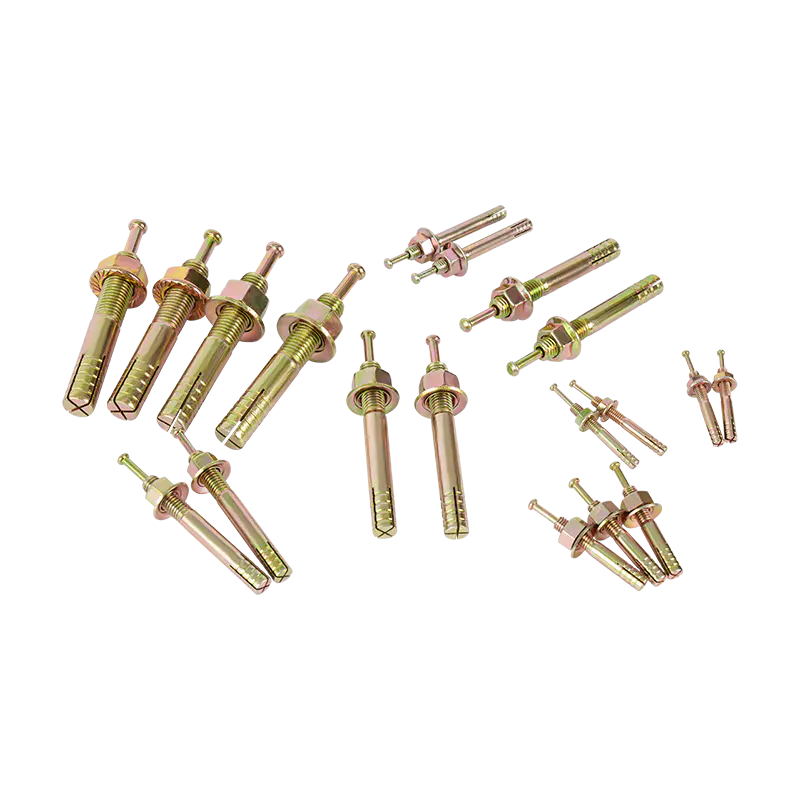
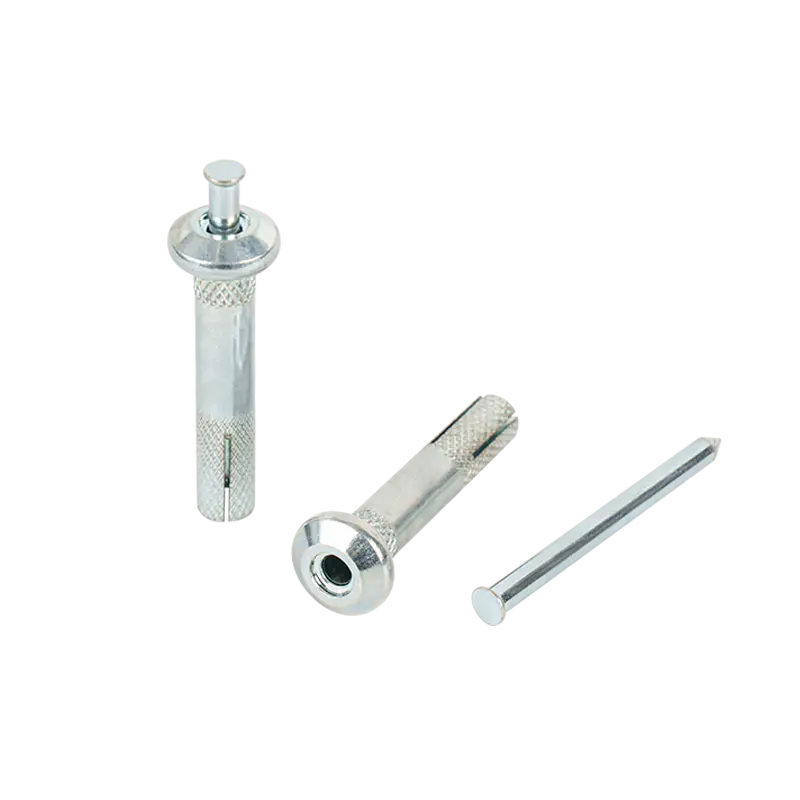
Strike anchors (also called nail-in anchors or hammer drive anchors) are pre-assembled, single-piece fasteners designed for quick installation in concrete, brick, and block. The anchor is inserted into a pre-drilled hole, and a pin is hammered in to expand the sleeve and lock the anchor in place—no torque wrench required.
Because strike anchors are permanently embedded in base materials that are difficult to access after construction, material selection is irreversible. Premature corrosion of the anchor body can cause:
- Loss of clamping force — reducing load-bearing capacity by up to 40–60% in severely corroded conditions.
- Concrete spalling — iron oxide expansion can exert pressures exceeding 2,000 psi, cracking surrounding concrete.
- Hidden structural failure — corrosion beneath coatings or inside concrete is often invisible until catastrophic failure occurs.
- Regulatory non-compliance — many building codes (IBC, Eurocode) mandate stainless steel anchors in corrosive zones.
Carbon Steel Strike Anchors: Properties, Coatings, and Suitable Environments
Carbon steel strike anchors are the economical default for dry, controlled indoor environments where corrosion risk is minimal. They provide excellent tensile and shear strength, typically achieving tensile loads of 1,500–4,500 lbs depending on diameter (3/16" to 1/2") and embedment depth.
Common Protective Coatings for Carbon Steel Strike Anchors
Coatings extend the service life of carbon steel anchors but do not make them equivalent to stainless steel in aggressive environments. The three most common coatings are:
- Zinc Electroplating (Clear or Yellow): Provides 12–96 hours of salt spray resistance per ASTM B117. Suitable only for completely dry indoor applications. Adds approximately 0.0002"–0.0005" per side.
- Hot-Dip Galvanizing (HDG): Deposits 2–4 mils of zinc, offering 500–1,000+ hours of salt spray resistance. Suitable for covered outdoor structures with intermittent moisture exposure. Cost premium over electroplating: approximately 15–25%.
- Mechanically Deposited Zinc (Dacromet / Geomet): Provides uniform coating on complex geometries, approximately 240–720 hours salt spray resistance. Used in automotive and some construction applications.
Ideal Applications for Carbon Steel Strike Anchors
- Interior concrete floors and walls (climate-controlled warehouses, offices, retail)
- Electrical conduit strapping and light fixture mounting in dry indoor areas
- Suspended ceiling grids in non-humid environments
- Temporary or short-term structural attachments where replacement is planned
Stainless Steel Strike Anchors: Grades, Performance, and Critical Use Cases
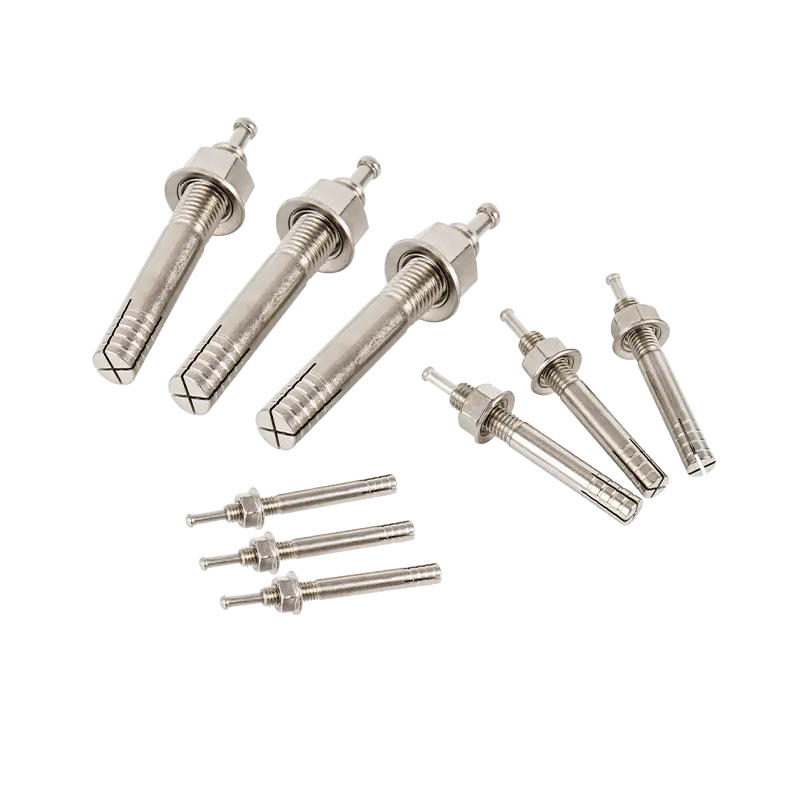
Stainless steel strike anchors are the definitive choice for corrosive, humid, marine, and chemically aggressive environments, offering service lives measured in decades rather than years.
Grade 304 vs. Grade 316 Stainless Steel: Choosing the Right Specification
Grade 316 stainless steel is mandatory in marine and chloride-rich environments; Grade 304 is sufficient for most other corrosive applications.
| Property | Grade 304 SS | Grade 316 SS | HDG Carbon Steel |
| Chromium Content | 18% | 16–18% | None |
| Molybdenum Content | None | 2–3% | None |
| Salt Spray Resistance (ASTM B117) | >1,000 hrs | >2,000 hrs | 500–1,000 hrs |
| Chloride Resistance | Moderate | Excellent | Poor |
| Cost vs. Carbon Steel (index) | 3–4× | 4–6× | 1× |
| Expected Service Life (coastal) | 15–25 years | 30–50+ years | 5–10 years |
| Magnetic? | Slightly | Slightly | Yes |
Table 1: Comparative properties of Grade 304 SS, Grade 316 SS, and HDG Carbon Steel strike anchors across key corrosion and performance metrics.
Ideal Applications for Stainless Steel Strike Anchors
- Marine and coastal structures: Boat docks, seawalls, breakwaters, offshore platforms (Grade 316 required within 1 km of saltwater).
- Water and wastewater treatment plants: Constant water exposure and chlorinated environments demand Grade 316.
- Food processing facilities: Regular washdowns with detergents and sanitizers. Grade 304 minimum; Grade 316 preferred.
- Swimming pools and aquatic centers: Chlorinated water vapor attacks carbon steel rapidly.
- Chemical processing plants: Exposure to acids, solvents, or halide compounds requires careful grade selection.
- Exterior architectural facades: Rain exposure, freeze-thaw cycles, and atmospheric pollutants accelerate corrosion.
Environment-Based Material Selection Guide for Strike Anchors
The single most reliable method for selecting strike anchor material is to classify the installation environment using a standardized corrosivity category system. ISO 9223 defines C1 through CX corrosivity categories based on annual metal loss rates. The table below maps these categories to practical scenarios and recommended anchor specifications.
| ISO Category | Environment Description | Typical Location | Recommended Anchor Material |
| C1 (Very Low) | Dry, climate-controlled | Offices, museums, labs | Electroplated Carbon Steel |
| C2 (Low) | Low humidity, minor condensation | Rural/suburban indoor/outdoor | HDG Carbon Steel or Grade 304 SS |
| C3 (Medium) | Moderate humidity, some pollutants | Urban outdoor, food plants | Grade 304 Stainless Steel |
| C4 (High) | High salinity or industrial pollution | Coastal (inland), chemical plants | Grade 316 Stainless Steel |
| C5 (Very High) | High chloride, aggressive chemicals | Marine, pools, acid environments | Grade 316 SS (+ specialist advice) |
| CX (Extreme) | Offshore, submerged, or highly corrosive | Offshore platforms, submerged | Grade 316L SS or Duplex / Specialist |
Table 2: ISO 9223 corrosivity category guide for selecting appropriate strike anchor materials based on environmental exposure.
Total Cost of Ownership: Is Stainless Steel Worth the Premium?
When factoring in replacement labor, downtime, and structural repair costs, stainless steel strike anchors deliver lower total lifetime cost in any environment beyond C1.
Consider a typical scenario: installing 500 strike anchors on an exterior concrete facade in a coastal city. The upfront cost comparison looks like this:
- HDG Carbon Steel (3/8" diameter): ~$0.45/anchor × 500 = $225 material cost
- Grade 316 Stainless Steel (3/8" diameter): ~$1.80/anchor × 500 = $900 material cost
The stainless option costs $675 more upfront. However, if the HDG anchors fail at year 8 in a C4 coastal environment:
- Scaffolding and access: $3,000–$8,000
- Concrete repair (spalling): $1,500–$4,000
- Replacement anchor installation: $800–$1,500
- Total replacement cost: $5,300–$13,500+
The Grade 316 stainless steel investment—at $675 more—avoids a potential $13,500 remediation. The ROI of choosing the correct material the first time is unambiguous in corrosive environments.
Mechanical Performance Comparison: Does Material Affect Load Capacity?
Stainless steel strike anchors offer slightly lower tensile strength than carbon steel anchors of the same diameter, but this difference is rarely the limiting factor in standard applications.
| Anchor Diameter | Carbon Steel — Tensile (lbs) | 316 SS — Tensile (lbs) | Carbon Steel — Shear (lbs) | 316 SS — Shear (lbs) |
| 3/16" | 710 | 590 | 520 | 440 |
| 1/4" | 1,200 | 1,010 | 840 | 720 |
| 3/8" | 2,600 | 2,180 | 1,900 | 1,620 |
| 1/2" | 4,500 | 3,780 | 3,200 | 2,750 |
Table 3: Approximate ultimate tensile and shear load values for carbon steel vs. Grade 316 stainless steel strike anchors in 3,000 psi concrete (values are illustrative reference benchmarks; always consult manufacturer ICCs for design values).
The ~15–16% reduction in load capacity for stainless steel can typically be compensated by upsizing one diameter (e.g., using 3/8" SS instead of 5/16" carbon steel) or adding one anchor per attachment point. This is a straightforward engineering trade-off with minimal cost impact.
Special Cases: When Neither Standard Option Is Sufficient
In extreme chemical environments, even Grade 316 stainless steel strike anchors may be subject to pitting corrosion, and specialist materials must be evaluated.
High-Acid Environments (pH < 4)
Sulfuric acid or hydrochloric acid exposure will attack both carbon steel and standard stainless grades. In these scenarios, consult a materials engineer about duplex stainless steel (e.g., SAF 2205) or Hastelloy fasteners. Strike anchors may not be the appropriate anchor type for submerged acid environments.
Galvanic Corrosion Risks
When stainless steel strike anchors are used in contact with aluminum structural members or copper-containing concrete admixtures, galvanic corrosion of the adjacent material (not the anchor itself) can be accelerated. Use appropriate isolation washers or coatings where dissimilar metals are in contact.
Crevice Corrosion in Grade 304
In chloride environments above 200 ppm, Grade 304 stainless steel is susceptible to crevice corrosion at the anchor-concrete interface. The molybdenum content in Grade 316 (2–3%) significantly improves resistance to this failure mode, which is why Grade 316 is the minimum specification for swimming pools, coastal structures, and any environment with regular seawater or deicing salt exposure.
Installation Best Practices to Maximize Corrosion Resistance
Proper installation is critical: even a Grade 316 stainless steel strike anchor will underperform if installed incorrectly, with damaged threads or inadequate embedment depth.
- Use carbide-tipped drill bits: Match bit diameter precisely to anchor specification. Oversize holes reduce expansion force and load capacity by up to 30%.
- Clean the hole thoroughly: Blow out dust with compressed air. Concrete dust mixed with moisture creates aggressive micro-environments at the anchor interface.
- Achieve full embedment depth: The anchor should be flush with or slightly below the surface. Under-driven anchors leave the corrosion-vulnerable expansion zone exposed.
- Do not use carbon steel setting tools with stainless anchors: Steel tool bits can deposit iron particles on the stainless surface, initiating surface rust that is mistaken for anchor corrosion.
- Apply compatible sealants in exposed joints: Where the anchor head is exposed to weather, a neutral-cure silicone sealant prevents water ingress around the pin.
- Maintain minimum edge and spacing distances: Typically 5× anchor diameter from free edges and 10× diameter between anchors to prevent concrete splitting under load.
Relevant Standards and Codes for Strike Anchor Material Selection
Multiple international and regional standards govern the minimum material requirements for anchors in corrosive environments—non-compliance can void warranties and insurance coverage.
- ASTM A153: Standard specification for zinc coating (hot-dip) on iron and steel hardware.
- ASTM A276 / A276M: Standard specification for stainless steel bars and shapes (covers 304 and 316 grade requirements).
- ISO 9223:2012: Corrosion of metals and alloys—corrosivity of atmospheres (C1–CX classification).
- IBC Section 1503.6: Requires corrosion-resistant fasteners for roofing applications and certain exterior envelope attachments.
- EN 1337-3 / ETAG 001: European technical guidance specifying stainless steel grades for anchors in aggressive environments.
- AS 3600 (Australia): Structural concrete design standard that defines exposure classifications and mandates corresponding anchor material grades.
Frequently Asked Questions (FAQ)
Q1: Can I use a carbon steel strike anchor outdoors if it has a zinc coating?
Only in low-exposure, sheltered outdoor environments (ISO C2). Electroplated zinc provides inadequate protection for exposed outdoor use. Hot-dip galvanized carbon steel anchors can perform acceptably in covered, non-coastal outdoor areas (C2–low C3), but for any direct rain exposure, coastal proximity, or cyclic wet-dry conditions, stainless steel is the recommended specification.
Q2: Is Grade 304 stainless steel sufficient for a swimming pool application?
No—Grade 316 stainless steel is required for swimming pools. Pool water typically contains 1–3 ppm free chlorine plus other chemicals. Grade 304 lacks sufficient molybdenum to resist pitting corrosion from chlorides at these concentrations. Grade 316 is the absolute minimum; Grade 316L (low carbon variant) is preferred for welded applications.
Q3: My stainless steel strike anchor has orange staining after installation. Is it corroding?
Surface staining on stainless steel is usually "tea staining"—a cosmetic issue, not structural corrosion. This occurs when iron particles from drilling tools or surrounding steel contaminate the stainless surface. Clean with a non-abrasive stainless steel cleaner or diluted phosphoric acid solution. If genuine pitting is visible (not just surface discoloration), consult a materials engineer and verify whether a higher grade is required for the environment.
Q4: How far from the ocean do I need to specify Grade 316 strike anchors?
Generally, Grade 316 is specified within 1 km (0.6 miles) of saltwater; Grade 304 may be acceptable from 1–5 km in sheltered conditions. However, local wind patterns, prevailing onshore breezes, and site-specific exposure must be evaluated. In high-wind coastal areas, salt aerosol deposition has been measured up to 5 km inland, pushing the Grade 316 zone further. Always consult local building codes, which often specify the exact distance thresholds.
Q5: Are stainless steel strike anchors stronger than carbon steel versions?
No—carbon steel typically has 15–20% higher tensile and shear values for the same diameter. Standard austenitic stainless steels (304/316) have lower yield strength than high-carbon or alloy steels. However, this difference can be addressed by selecting a slightly larger diameter stainless anchor. In most practical applications, the structural difference is negligible once the size is adjusted appropriately.
Q6: Can strike anchors be used in seismically active regions?
Strike anchors can be used in seismic zones, but must be specifically listed and tested for seismic applications per ACI 318-19 / ICC-ES AC193. Not all strike anchor products carry seismic approval—verify the manufacturer's ICC-ES ESR report for seismic categories D, E, or F before specifying. Material selection (carbon vs. stainless) applies equally in seismic applications, based on environmental exposure classification.
Conclusion: A Decision Framework for Strike Anchor Material Selection
The choice between carbon steel and stainless steel strike anchors ultimately comes down to three factors: corrosivity of the environment, required service life, and total cost of ownership.
- Dry indoor, climate-controlled (C1): → Electroplated carbon steel strike anchors are appropriate and cost-effective.
- Sheltered outdoor, rural or suburban, low humidity (C2): → Hot-dip galvanized carbon steel or Grade 304 SS, depending on budget and design life.
- Urban outdoor, food processing, wet indoor (C3): → Grade 304 stainless steel strike anchors minimum.
- Coastal, chemical, aquatic, high-chloride (C4–C5): → Grade 316 stainless steel strike anchors are mandatory.
- Offshore, submerged, extreme chemical (CX): → Specialist materials engineering consultation required; duplex or super-austenitic grades may be necessary.
When in doubt, upgrade the specification. The material cost difference between carbon steel and stainless steel strike anchors is a fraction of the cost of anchor failure, concrete remediation, or structural re-engineering. A decision that saves $500 in material today should never risk $10,000 in repairs tomorrow.