English
 日本語
日本語
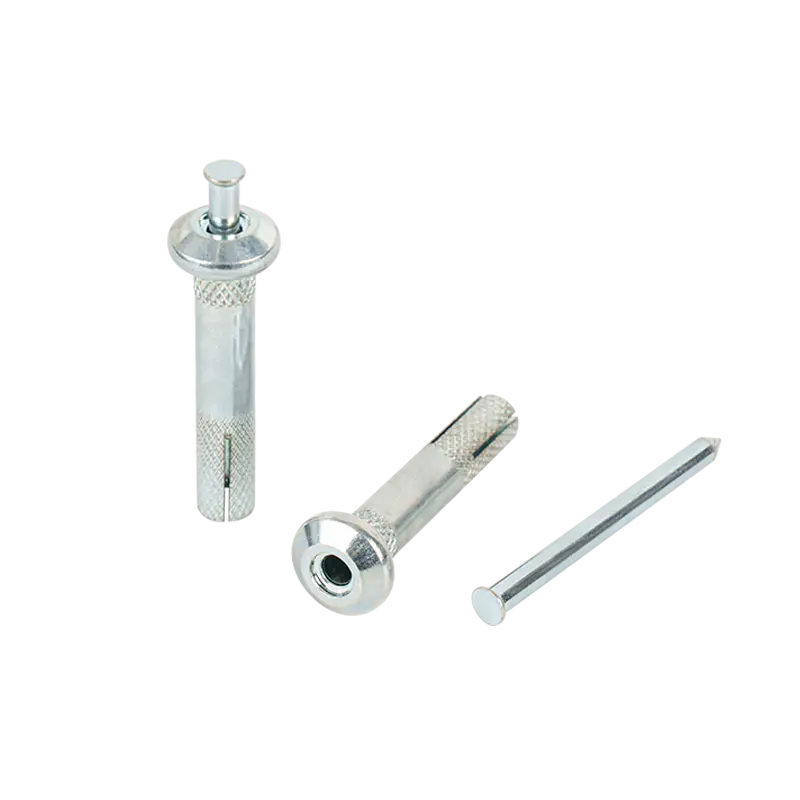
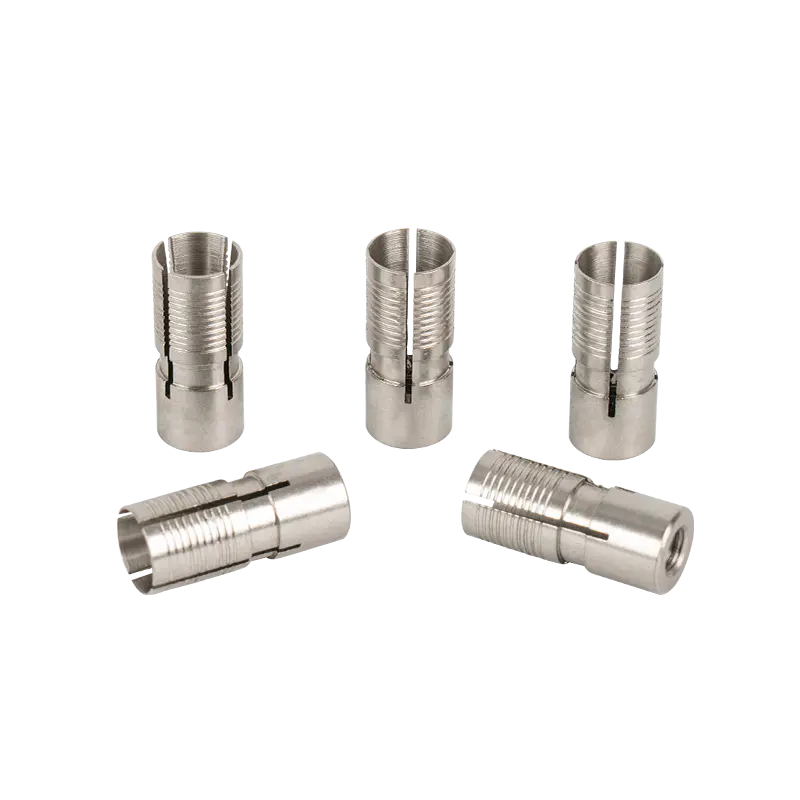
Concrete strike anchors are internally threaded drop-in fasteners that are set permanently into a pre-drilled hole in concrete, masonry, or block by striking a setting tool into the anchor body -- expanding the lower sleeve outward against the hole wall to create a mechanical interlock that resists pullout forces of 1,000 to 6,000 lbs depending on anchor diameter and embedment depth. Unlike externally threaded concrete screws or chemical anchors, strike anchors are designed to sit flush with or slightly below the concrete surface, allowing a bolt or threaded rod to be inserted and removed repeatedly without disturbing the anchor itself.
This guide covers everything engineers, contractors, and DIYers need to know about concrete strike anchors: how they work mechanically, which sizes and materials to specify, how installation compares to alternative anchor types, step-by-step installation instructions, load data, and answers to the most commonly asked technical questions.
Content
- How Do Concrete Strike Anchors Work?
- What Are the Standard Sizes and Load Ratings of Concrete Strike Anchors?
- How to Install Concrete Strike Anchors: Step-by-Step
- Which Concrete Anchor Type Should You Use? Strike Anchors vs Alternatives
- What Materials Are Concrete Strike Anchors Made From and Which Should You Choose?
- Why Do Concrete Strike Anchors Fail and How Can You Prevent It?
- Where Are Concrete Strike Anchors Used? Common Applications
- FAQ: Concrete Strike Anchors
- Conclusion: Getting the Most from Concrete Strike Anchors
How Do Concrete Strike Anchors Work?
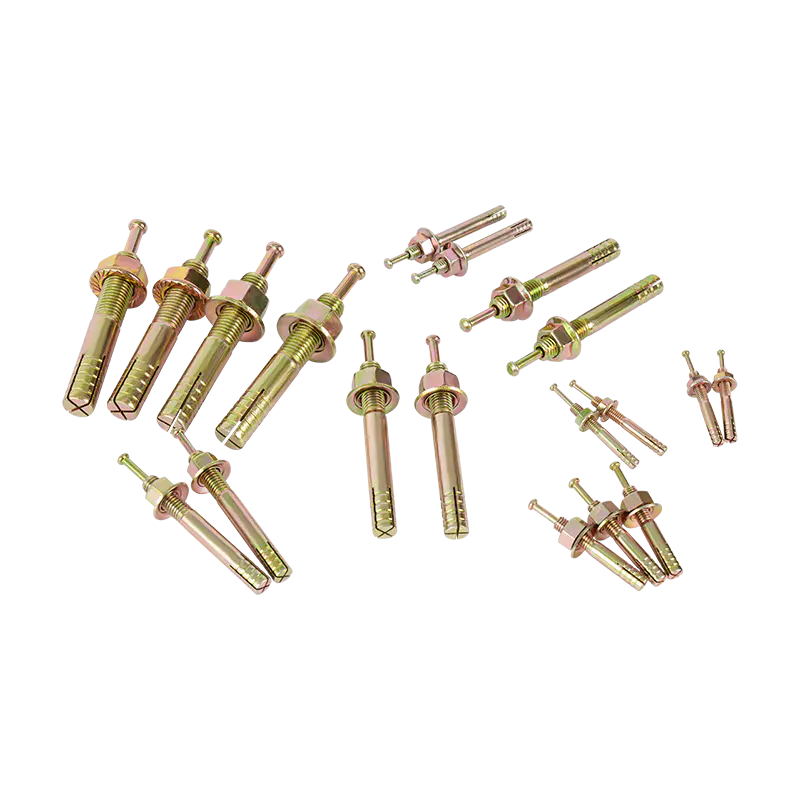
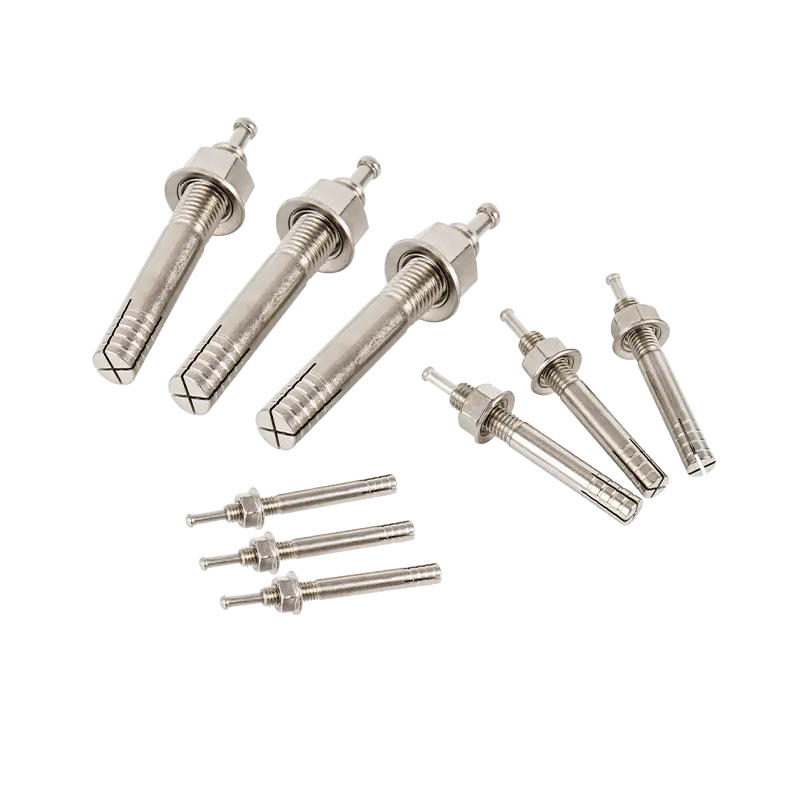
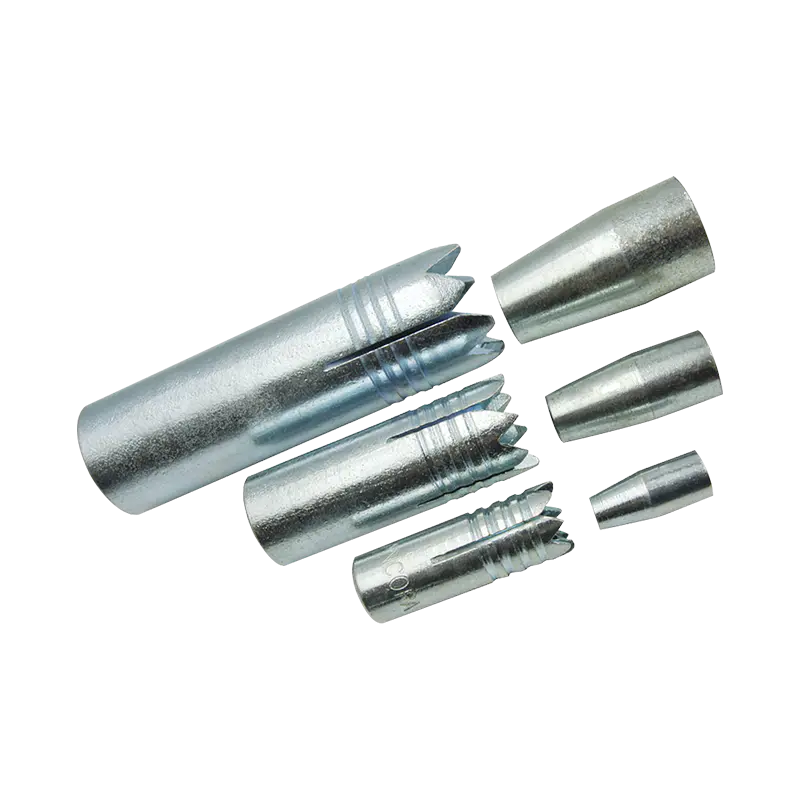
Concrete strike anchors work through a mechanical expansion mechanism: a conical expander plug at the anchor's base is driven upward into the anchor body by a setting tool, forcing four or six steel petals in the anchor's lower section to flare outward against the concrete hole wall, creating a permanent interference fit that locks the anchor in place.
The anatomy of a concrete strike anchor consists of four components working together:
- Anchor body -- a cylindrical zinc alloy, carbon steel, or stainless steel tube with internal threads at the top and a slotted expansion section at the bottom. The slots divide the lower section into expansion petals that can flare outward when the cone is driven upward.
- Expander plug (cone) -- a hardened steel or zinc conical component that sits inside the base of the anchor body before installation. When struck by the setting tool, it travels upward into the anchor body, wedging the expansion petals outward against the concrete.
- Internal threads -- machine threads (typically UNC or metric) machined into the upper portion of the anchor body that accept a standard bolt or threaded rod after installation. Common thread sizes range from 1/4 inch to 3/4 inch for imperial anchors and M6 to M20 for metric.
- Setting tool -- a hardened steel punch or drive pin matched to the anchor's inner diameter, used with a hammer to drive the expander plug upward and set the expansion mechanism. Most manufacturers supply a setting tool specific to each anchor diameter.
Once set, the expanded petals bear against the concrete hole wall at a contact area determined by the anchor diameter and embedment depth. The concrete resists the outward bearing force through its compressive strength -- which is why concrete strike anchors perform best in concrete with a minimum compressive strength of 2,000 to 3,000 psi (13.8 to 20.7 MPa), and why load values drop significantly in cracked concrete or block masonry.
The defining characteristic that distinguishes strike anchors from other drop-in anchor types is the setting method -- a single hammer blow to the setting tool (or a series of controlled blows) collapses the expander plug upward, distinguishing them from self-drilling anchors (which use rotary hammer action) and adhesive anchors (which use chemical curing rather than mechanical expansion).
What Are the Standard Sizes and Load Ratings of Concrete Strike Anchors?
Concrete strike anchors are manufactured in thread sizes from 1/4 inch (M6) to 3/4 inch (M20), with ultimate pullout strengths in 3,000 psi concrete ranging from approximately 1,200 lbs for the smallest size to over 6,000 lbs for the largest -- though design loads must use a safety factor of 4:1 applied to the ultimate values for structural applications.
| Thread Size | Drill Bit Size | Min Embedment | Ultimate Pullout (3,000 psi) | Design Load (4:1 safety factor) |
| 1/4 inch (M6) | 3/8 inch (10 mm) | 1 inch (25 mm) | approx. 1,200 lbs (5.3 kN) | 300 lbs (1.3 kN) |
| 3/8 inch (M10) | 1/2 inch (12 mm) | 1-1/2 inch (38 mm) | approx. 2,400 lbs (10.7 kN) | 600 lbs (2.7 kN) |
| 1/2 inch (M12) | 5/8 inch (16 mm) | 2 inches (50 mm) | approx. 3,800 lbs (16.9 kN) | 950 lbs (4.2 kN) |
| 5/8 inch (M16) | 3/4 inch (20 mm) | 2-3/4 inch (70 mm) | approx. 5,100 lbs (22.7 kN) | 1,275 lbs (5.7 kN) |
| 3/4 inch (M20) | 1 inch (25 mm) | 3-1/4 inch (83 mm) | approx. 6,400 lbs (28.5 kN) | 1,600 lbs (7.1 kN) |
Table 1: Concrete strike anchor size chart showing drill bit requirements, minimum embedment depths, and approximate load values in 3,000 psi normal-weight concrete. Always consult manufacturer technical data and apply project-specific safety factors for structural applications.
These load values assume installation in uncracked normal-weight concrete at the minimum embedment depth with a minimum edge distance of 6 anchor diameters and a minimum spacing of 12 anchor diameters between adjacent anchors. Installations closer to edges, in cracked concrete, or in lightweight concrete require significant load reductions -- typically 30 to 50 percent -- applied per ACI 318 Appendix D (or equivalent national standard) before the values can be used for structural design.
How to Install Concrete Strike Anchors: Step-by-Step
Correct installation of concrete strike anchors follows six steps in strict sequence -- drilling to exact depth, cleaning the hole, inserting the anchor flush, driving the setting tool to full engagement, verifying the set, and threading the fastener -- and errors at any stage, particularly under-driving the setting tool, result in anchors that will pull out at a fraction of their rated load.
Step 1 -- Drill the Hole to the Correct Diameter and Depth
Use a carbide-tipped hammer drill bit sized exactly to the anchor manufacturer's specification -- for example, a 1/2 inch bit for a 3/8 inch thread anchor. Oversize the hole even by 1/16 inch and the expansion petals will not bear against the concrete adequately, reducing pullout strength by 20 to 40 percent. Use masking tape wrapped around the drill bit at the required depth (embedment depth plus the anchor length minus any protrusion) as a depth gauge.
Drill in hammer mode, not rotation-only mode. The percussive action of the hammer drill is essential for creating a hole with the correct diameter consistency in concrete -- rotation-only drilling creates a smaller, off-round hole that is difficult to clean and may not allow the anchor to insert fully. Drill the hole perpendicular to the concrete surface; an angled hole creates uneven bearing between the expansion petals and hole wall.
Step 2 -- Clean the Hole Thoroughly
Concrete dust and debris remaining in the hole after drilling is the second most common cause of reduced anchor performance. Blow out the hole with compressed air (minimum 2 blows), brush the hole with a wire brush of the appropriate diameter (minimum 4 passes in and out), and blow out again. In environments where compressed air is not available, a rubber bellows pump achieves comparable results with 4 to 6 pumping actions. Do not use water to clean the hole -- wet concrete in the hole can affect the friction characteristics of the expansion mechanism.
Step 3 -- Insert the Anchor
Drop or tap the concrete strike anchor into the hole with the open threaded end facing upward and the expander cone at the bottom. The anchor top should be flush with or slightly below (1/8 to 1/4 inch) the concrete surface. If the anchor does not drop to the bottom of the hole freely, do not force it with excessive hammer blows -- check that the hole diameter is correct and that it is fully clean. An anchor that binds before reaching full depth will not set correctly.
Step 4 -- Set the Anchor with the Setting Tool
Insert the setting tool (a hardened punch matching the anchor's inner diameter) into the top of the anchor and strike it firmly with a hammer. The setting tool drives the expander cone upward through the anchor body, forcing the expansion petals outward. The setting tool must be driven until it bottoms out -- meaning it cannot travel further into the anchor -- to confirm that the cone has reached full expansion.
A typical 1/2 inch anchor requires 3 to 5 firm hammer blows with a 2 to 3 lb hammer. A 3/4 inch anchor may require 5 to 8 blows. If the setting tool does not bottom out after 10 blows, the hole may be oversized or insufficiently cleaned. Do not attempt to reuse an incompletely set anchor -- the expansion petals, once partially expanded, cannot be contracted, and a partially set anchor will not achieve rated load.
Step 5 -- Verify the Set
After setting, attempt to rotate the anchor body with your fingers or a pair of pliers. A correctly set concrete strike anchor should be completely immovable -- no rotation and no vertical movement under hand pressure. If the anchor rotates freely or can be pulled upward, the hole is oversized, the hole is under-cleaned, or the concrete strength is insufficient for the anchor diameter specified. In this case, remove the anchor, fill the hole with non-shrink grout, allow to cure, and redrill to the correct diameter.
Step 6 -- Install the Bolt or Threaded Rod
Thread the appropriate bolt or threaded rod into the anchor's internal threads. Tighten to the manufacturer's recommended installation torque -- typically 3 to 7 ft-lbs for 1/4 inch anchors and 25 to 40 ft-lbs for 3/4 inch anchors. Overtightening can strip the internal threads; undertightening leaves the connection loose. Use a calibrated torque wrench for structural applications where the fastener torque affects the clamping load on the attached fixture.
Which Concrete Anchor Type Should You Use? Strike Anchors vs Alternatives
Concrete strike anchors are the best choice when the bolt or threaded rod must be removable and reinstallable, the concrete surface must remain flush after installation, and the application involves repeated assembly and disassembly -- but they are not the correct choice for cracked concrete, high-vibration environments, or applications requiring the highest possible pullout loads in small concrete sections.
| Anchor Type | Setting Method | Removable Bolt? | Cracked Concrete? | Best Application |
| Strike anchor (drop-in) | Hammer setting tool | Yes, repeatedly | No (uncracked only) | Overhead, flush surface, repeated access |
| Wedge anchor (sleeve) | Torque (nut tightening) | No (anchor stays) | No (uncracked only) | Heavy structural loads, floor anchoring |
| Chemical adhesive anchor | Chemical cure (8 to 24 hrs) | No (permanent) | Yes (certified types) | Highest loads, cracked concrete, rebar |
| Concrete screw (tapcon style) | Rotary drill (self-tapping) | Yes (limited times) | Limited | Light-duty, fast installation, low loads |
| Expansion shield (lead or plastic) | Bolt torque expansion | Yes | No | Light fixture, low-load, masonry block |
Table 2: Comparison of concrete anchor types by setting method, bolt removability, suitability for cracked concrete, and best application scenarios.
What Materials Are Concrete Strike Anchors Made From and Which Should You Choose?
Concrete strike anchors are manufactured in three primary materials -- zinc alloy (zamak), carbon steel with zinc plating, and stainless steel (Type 304 or 316) -- and the correct material choice depends on the environmental exposure of the installation, with stainless steel mandatory for any outdoor, coastal, or high-humidity application where corrosion would compromise structural integrity.
Zinc Alloy (Zamak) Strike Anchors
Zinc alloy anchors are the most widely available and least expensive option, suitable for dry interior applications where corrosion is not a concern. They offer adequate load capacity for most residential and commercial interior applications but have lower strength than steel equivalents -- a 1/2 inch zinc alloy strike anchor has an ultimate pullout approximately 15 to 20 percent lower than an equivalent carbon steel anchor. Never use zinc alloy anchors outdoors, in wet areas, or where they may contact dissimilar metals in an electrolytic environment.
Carbon Steel with Zinc Plating
Zinc-plated carbon steel strike anchors offer the highest mechanical strength of the three material options and are suitable for interior structural applications and dry covered environments. The zinc plating provides limited corrosion resistance -- typically 96 to 200 hours of salt spray resistance per ASTM B117, which is inadequate for exterior or marine exposure. Use carbon steel anchors only in conditioned interior spaces where moisture exposure is minimal and permanent.
Stainless Steel (Type 304 and Type 316)
Stainless steel concrete strike anchors are required for any exterior installation, pool deck application, coastal environment, food processing facility, chemical plant, or any location where the anchor will be exposed to moisture, chlorides, or corrosive chemicals. Type 304 stainless provides good general corrosion resistance for most exterior environments. Type 316 stainless -- with added molybdenum content -- provides superior resistance to chloride attack and is specified for marine environments, coastal installations within 1 mile of salt water, and applications involving regular exposure to deicing salts. Stainless steel anchors cost 3 to 5 times more than zinc alloy equivalents but are the only correct choice for applications where corrosion of a carbon steel anchor would create a structural failure risk.
Why Do Concrete Strike Anchors Fail and How Can You Prevent It?
The four most common causes of concrete strike anchor failure in the field are: incorrect hole diameter, inadequate hole cleaning, incomplete setting (under-driven expander cone), and installation in concrete that is too weak or too close to an edge -- each of which can reduce actual pullout strength to 20 to 50 percent of the rated value.
| Failure Mode | Root Cause | Load Reduction | Prevention |
| Anchor spins in hole | Oversized drill bit used | Up to 50 percent | Use exact-size carbide drill bit; verify with bit gauge |
| Low pullout on testing | Dust-filled uncleaned hole | 20 to 40 percent | Blow-brush-blow protocol; compressed air minimum |
| Setting tool bottoms out with slack | Expander cone not fully driven | 30 to 60 percent | Drive until tool is positively bottomed; check with feeler gauge if unsure |
| Edge cone-out failure | Installation too close to concrete edge | 40 to 80 percent | Maintain minimum 6 anchor diameters from any free edge |
| Corrosion failure in service | Wrong material specified for environment | Complete failure over time | Use stainless steel for any non-dry interior application |
Table 3: Common concrete strike anchor failure modes, root causes, approximate load reduction, and prevention measures.
Where Are Concrete Strike Anchors Used? Common Applications
Concrete strike anchors are the preferred fastener wherever a threaded connection must be flush with the concrete surface and the bolt or rod must be removable for equipment maintenance, inspection, or replacement -- making them standard in manufacturing facilities, precast concrete panels, overhead installations, and infrastructure maintenance.
- Overhead mechanical and electrical equipment mounting -- HVAC ductwork hangers, conduit supports, and pipe hangers frequently use strike anchors because the flush anchor profile allows the hanger rod to be removed and reinstalled during maintenance without disturbing the concrete ceiling
- Precast concrete erection -- precast concrete panels and beams are commonly fitted with strike anchors cast into or drilled into connection zones, allowing temporary lifting hardware and erection bracing to be bolted in and removed repeatedly during construction
- Industrial equipment bases -- machinery that requires periodic removal for servicing -- pumps, compressors, motors -- is often anchored with strike anchors so the equipment bolts can be removed without anchor disturbance
- Formwork and concrete placing equipment -- strike anchors allow concrete forms to be anchored to hardened concrete and removed cleanly after stripping
- Temporary fencing and barrier installation -- construction sites use strike anchors in permanent concrete pads to allow temporary safety barriers and fencing to be bolted in and relocated as site conditions change
- Electrical panel and distribution board mounting -- electrical equipment that must be periodically upgraded or replaced benefits from the removable-bolt feature of strike anchors installed in concrete walls
FAQ: Concrete Strike Anchors
Q1: Can concrete strike anchors be removed after installation?
The anchor body itself cannot be removed once correctly set -- the expansion mechanism is permanent and destructive to remove. The bolt or threaded rod screwed into the anchor can be removed and reinstalled any number of times, which is the primary advantage of the strike anchor design. If an anchor body must be removed (for example, because of a misplaced installation), it must be drilled out using a carbide core bit of the appropriate diameter, and the resulting hole must be filled and redrilled or a larger-diameter anchor installed.
Q2: Can I use concrete strike anchors in hollow concrete block (CMU)?
Concrete strike anchors are not recommended for hollow concrete masonry units (CMU block) because the expansion mechanism requires solid concrete surrounding the anchor hole to develop bearing capacity. In hollow block, the expansion petals may break through the thin wall of the block cell rather than bearing against solid material, resulting in near-zero pullout resistance. For hollow CMU, use hollow-wall toggle bolts, chemical anchors specifically rated for masonry, or expansion anchors designed for hollow material with a large bearing plate at the back of the wall cavity.
Q3: What is the difference between a strike anchor and a drop-in anchor?
The terms strike anchor and drop-in anchor are used interchangeably by most manufacturers and contractors and refer to the same product: an internally threaded anchor set by driving an expander cone upward with a setting tool. Some manufacturers use "drop-in anchor" to refer specifically to the type where the expander cone is a separate piece dropped into the anchor before the setting tool is used, while "strike anchor" refers to versions where the cone is pre-loaded into the anchor body at the factory. In practice, the installation procedure and performance characteristics are identical, and the two names describe the same anchor category.
Q4: How do I know if a concrete strike anchor is correctly set without a pull test?
Three field checks confirm a correctly set strike anchor without a formal pull test. First, the setting tool must bottom out positively -- you will feel and hear a definite change in resistance as the cone reaches full travel. Second, the anchor body must be completely immovable when you attempt to rotate it with pliers or push it downward by hand. Third, the top of the anchor should be flush with or slightly below the concrete surface, not elevated above it. If any of these checks fail, the anchor is not correctly set and must be removed and replaced. For structural applications or overhead installations, a calibrated pull tester verifying load to at least 80 percent of design load is strongly recommended before the installation is accepted.
Q5: Are concrete strike anchors suitable for seismic applications?
Standard concrete strike anchors are generally not certified for use in seismic design categories C through F (high seismic risk) per IBC and ASCE 7 requirements, because mechanical expansion anchors in these categories must meet specific ductility and displacement requirements under cyclic loading that most standard strike anchors do not satisfy. In seismic zones, engineers typically specify adhesive anchors with ICC-ES ESR reports confirming seismic performance, or specially engineered mechanical anchors with published seismic load values. For non-structural applications or seismic design categories A and B, standard strike anchors may be acceptable -- always confirm with the project structural engineer and the local building authority.
Q6: What thread type do concrete strike anchors use -- UNC or metric?
Concrete strike anchors are manufactured in both UNC (Unified National Coarse) imperial threads and ISO metric threads, depending on the manufacturer and target market. In North America, UNC threads (1/4-20, 3/8-16, 1/2-13, 5/8-11, 3/4-10) are standard. In Europe, Australia, and Asia, metric threads (M6, M8, M10, M12, M16, M20) are standard. Anchors with UNC threads will not accept metric bolts and vice versa, so always confirm which thread standard your anchor uses before purchasing the mating bolts or threaded rod. Both thread standards are available in all three anchor materials (zinc alloy, carbon steel, and stainless steel).
Conclusion: Getting the Most from Concrete Strike Anchors
Concrete strike anchors are one of the most practical and versatile fastening solutions in concrete construction -- combining the ability to accept and release a threaded bolt repeatedly with a flush-mounted profile that suits overhead, surface, and recessed installations equally well. Their performance, however, is entirely dependent on installation quality: the correct hole diameter, thorough hole cleaning, complete setting of the expander cone, adequate edge distance, and the right material for the service environment.
Specifying the right size begins with calculating the design load required, applying the appropriate safety factor (minimum 4:1 for life-safety applications), selecting the anchor diameter that achieves that design load at the available embedment depth, and confirming that the concrete compressive strength and section thickness support the chosen anchor. When those calculations confirm a match, and installation follows the six-step procedure correctly, concrete strike anchors deliver decades of reliable, repeatable service with the bolt-removal convenience no permanent anchor system can match.
For any structural or overhead application, always verify the installation with a pull test, use stainless steel anchors in any environment with moisture or chemical exposure, and consult the anchor manufacturer's published load data and a licensed structural engineer for code-governed work. Done correctly, concrete strike anchor installations are among the most reliable fastening solutions available in modern construction.