English
 日本語
日本語
Strike Anchors can be used safely under dynamic loads and vibration, but only when correctly specified, installed, and load-rated for those conditions. The core issue is that Strike Anchors are a type of expansion anchor (also called a nail-in or hammer-set anchor) whose holding mechanism depends on mechanical wedge expansion against the walls of a drilled hole. Under sustained or cyclic dynamic loading — such as vibration from machinery, seismic movement, or repeated impact — that expansion grip can progressively relax if the anchor is under-specified or improperly installed. This guide explains exactly when Strike Anchors are safe, where the real risks lie, and how to specify them correctly for dynamic applications.
Content
- What Is a Strike Anchor and How Does It Hold?
- How Dynamic Loads Differ From Static Loads — And Why It Matters
- Strike Anchor Performance Under Vibration: What the Data Shows
- Strike Anchor vs. Other Anchor Types Under Dynamic and Vibration Loading
- When Is a Strike Anchor Acceptable for Dynamic Load Applications?
- Safe Load Limits: How to Apply the Right Safety Factor for Dynamic Conditions
- Installation Best Practices to Maximize Strike Anchor Performance Under Dynamic Loads
- Common Failure Modes of Strike Anchors in Dynamic Load Environments
- Seismic Considerations: Can Strike Anchors Be Used in Earthquake Zones?
- Frequently Asked Questions About Strike Anchor Safety Under Dynamic Loads
- Can I use a Strike Anchor to mount a pump or motor directly to concrete?
- How do I know if my Strike Anchor is still holding properly after extended vibration exposure?
- What is the difference between Strike Anchors and wedge anchors for dynamic applications?
- Does concrete thickness affect Strike Anchor performance under vibration?
- Is a Strike Anchor safe for overhead applications near vibration sources?
- What role does vibration isolation play in making Strike Anchors safer?
- Summary: Key Rules for Using Strike Anchors Safely Under Dynamic Loads
What Is a Strike Anchor and How Does It Hold?
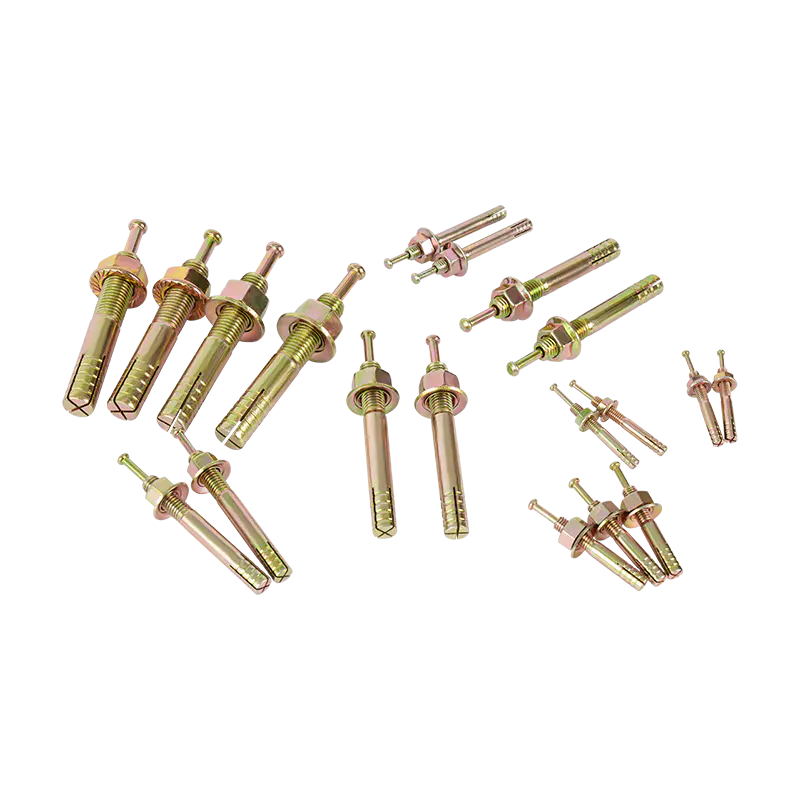
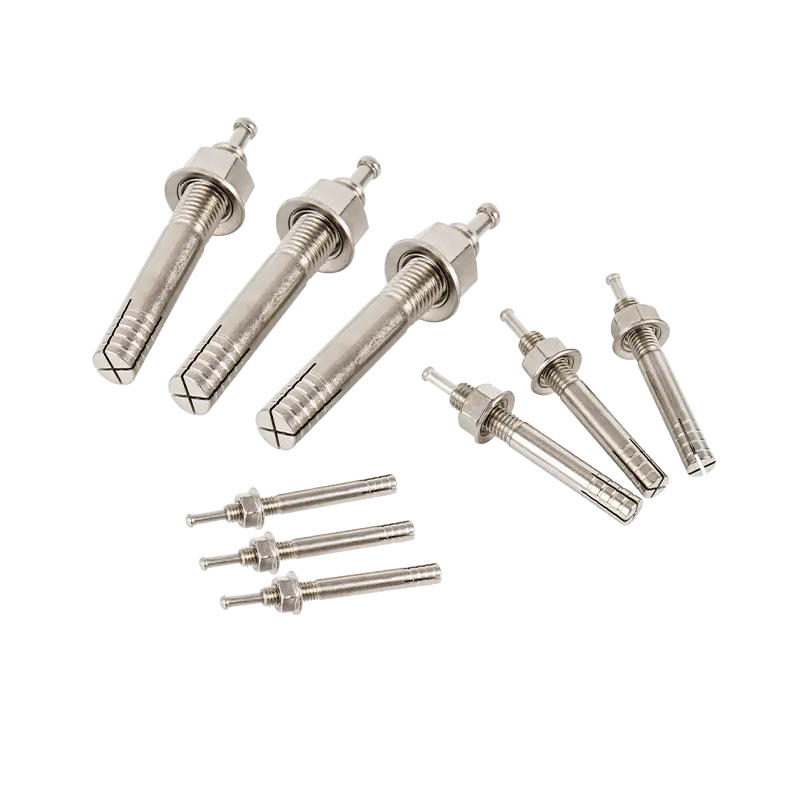
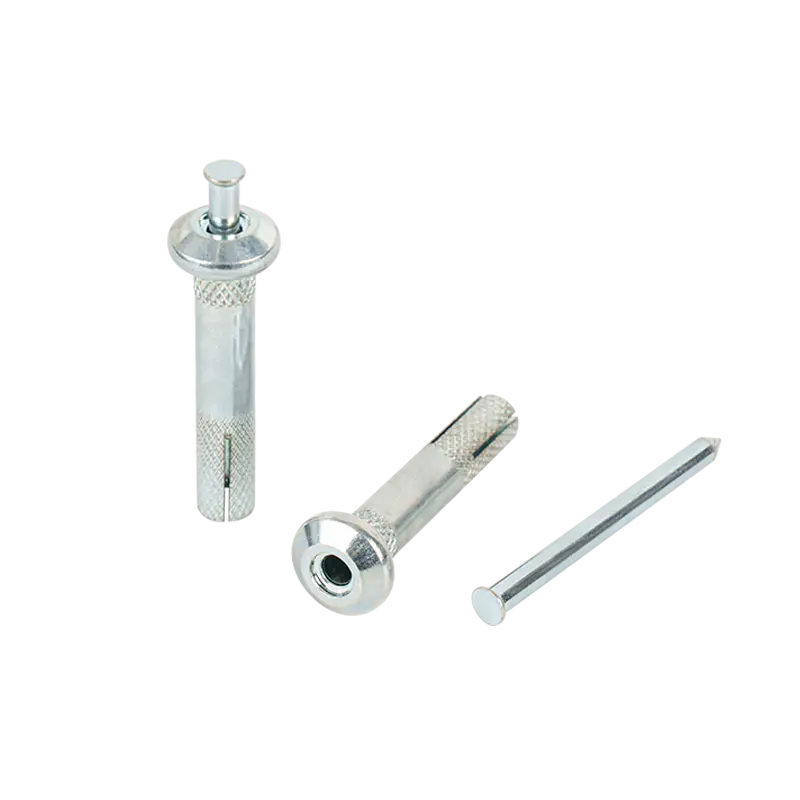
A Strike Anchor is a one-piece, internally threaded expansion anchor that is set by driving a steel pin into its body with a hammer, forcing the lower sleeve to expand outward into the surrounding concrete or masonry. Unlike a screw anchor that creates mechanical interlock with the substrate through threads, or a chemical anchor that bonds chemically with the base material, the Strike Anchor's holding mechanism is entirely friction-based: the expanded sleeve presses laterally against the drilled hole wall, and it is that lateral pressure — not adhesion or interlocking geometry — that resists pullout.
This friction-based mechanism is the central factor in every discussion about Strike Anchor performance under dynamic loads. Friction grip can diminish when:
- Cyclic tensile loads repeatedly stretch and relax the anchor body, gradually loosening the wedge contact
- Sustained vibration from rotating or reciprocating machinery causes micro-movement between the sleeve and hole wall
- Shear-plus-tension combined loading introduces rotational micro-movement that progressively frees the sleeve
- Cracked concrete allows crack-width cycling under load, which can open the hole diameter and reduce sleeve contact pressure
Understanding this mechanism makes it clear that "is the Strike Anchor safe under vibration?" is never a yes/no question — it is a design and specification question that depends on load magnitude, frequency, substrate condition, and safety factor applied.
How Dynamic Loads Differ From Static Loads — And Why It Matters
Dynamic loads are fundamentally more demanding than static loads because they introduce energy that a fastener system must absorb repeatedly without relaxing its grip — a requirement that static-rated anchors are not designed to meet.
In structural fastening, loads are categorized as:
- Static load: A constant, non-varying force. Example — a suspended HVAC duct hanging from an overhead slab. The load is essentially fixed once the duct is filled and pressurized.
- Quasi-static load: A slowly changing load that can be treated as static for most design purposes. Example — thermal expansion forces on a pipe clamp.
- Dynamic load: A load that changes in magnitude, direction, or both over time, often rapidly. Examples — vibration from a pump motor, seismic acceleration, traffic impact loads on a bridge anchor.
- Shock load: A sudden, high-magnitude impulse load. Example — an anchor supporting a safety barrier struck by a vehicle.
The key difference is fatigue. Under static loads, an anchor either holds or it fails — there is no cumulative degradation over time at loads below the failure threshold. Under dynamic loads, an anchor can hold indefinitely at low load levels, then fail progressively as cyclic load accumulates micro-damage in the grip zone. Industry design standards such as ETAG 001 (European Technical Approval Guideline for Anchors) and ICC-ES AC193 in North America specifically require dynamic and seismic performance testing separate from static load tests — because static ratings alone are not sufficient to predict anchor behavior under vibration or seismic events.
Strike Anchor Performance Under Vibration: What the Data Shows
Independent vibration testing of expansion-type anchors — including hammer-set designs — consistently shows that holding force reduction of 15–40% can occur after sustained vibration exposure, depending on anchor size, concrete strength, and vibration frequency.
Key findings from published anchor performance research and standard test protocols:
- Frequency sensitivity: Expansion anchors are most vulnerable to vibration in the 10–80 Hz range — the typical operating frequency of industrial motors, compressors, and fans. Below 10 Hz, the quasi-static nature of the loading limits progressive relaxation. Above 80 Hz, the low amplitude of individual cycles limits total energy transfer per cycle.
- Load-to-capacity ratio: When working loads are kept below 25% of the rated static capacity, most correctly installed Strike Anchors show minimal grip relaxation even after 100,000 vibration cycles. At loads exceeding 40% of static capacity, grip loss of 20–35% is common within 50,000 cycles in laboratory conditions.
- Concrete strength effect: In concrete with compressive strength ≥4,000 psi (27.6 MPa), expansion anchors perform significantly better under vibration than in 2,500 psi concrete — because the stiffer substrate limits micro-movement of the sleeve during vibration cycles.
- Hole cleanliness: Dust and debris in the drilled hole reduce initial expansion grip by up to 30%, dramatically compressing the safety margin before vibration-induced relaxation becomes critical. Clean, dry holes are non-negotiable for dynamic applications.
Strike Anchor vs. Other Anchor Types Under Dynamic and Vibration Loading
When compared directly for dynamic and vibration applications, Strike Anchors perform adequately for low-to-moderate dynamic loads but are outperformed by undercut anchors and chemical adhesive anchors in high-vibration or seismic-critical applications.
| Anchor Type | Holding Mechanism | Vibration Resistance | Seismic Suitability | Dynamic Load Rating Available? | Typical Use |
|---|---|---|---|---|---|
| Strike Anchor (Hammer-Set) | Friction / expansion | Moderate | Limited (cracked concrete issues) | No (static only) | Light fixtures, conduit, racking in non-seismic zones |
| Wedge / Torque-Set Expansion Anchor | Friction / expansion (torque-controlled) | Moderate–Good | Moderate (with seismic-rated models) | Yes (select models) | Mechanical equipment, pipe supports |
| Undercut Anchor | Mechanical interlock | Excellent | Excellent (cracked and uncracked) | Yes (full seismic ratings) | Safety-critical, seismic, heavy dynamic loads |
| Chemical / Adhesive Anchor | Adhesive bond | Good–Excellent | Good (depends on resin type) | Yes (select products) | High-load, seismic, cracked concrete, large diameter |
| Screw Anchor (Concrete Screw) | Thread interlock | Good | Moderate (select seismic models) | Yes (select models) | Light–medium fixtures, removable installations |
Table 1: Anchor type comparison for dynamic load and vibration applications. Ratings reflect typical performance across published industry test data and engineering guides.
When Is a Strike Anchor Acceptable for Dynamic Load Applications?
Strike Anchors are acceptable for dynamic load applications when the working load remains below 20–25% of the rated static capacity, the substrate is sound uncracked concrete of at least 3,000 psi, and regular inspection intervals are programmed into the maintenance schedule.
Acceptable Applications
- Light conduit or cable tray supports in non-seismic zones where vibration is incidental (e.g., building vibration from HVAC, not directly mounted to vibrating machinery)
- Non-structural partitions and light-duty racking subject to foot traffic or minor dynamic loads — where anchor loads are well below 20% of static capacity
- Low-frequency, low-amplitude environments such as offices or residential buildings where building sway or traffic-induced vibration is in the range of 1–5 Hz at very low amplitude
- Temporary installations or installations subject to regular inspection and re-torquing (even though Strike Anchors are not torque-controlled, periodic inspection for any sign of movement is feasible)
Applications Where Strike Anchors Should NOT Be Used
- Direct machinery mounting — anchoring rotating or reciprocating equipment (compressors, pumps, motors, generators) directly to concrete with Strike Anchors is not recommended; use chemical or undercut anchors
- Seismic design categories C, D, E, or F (IBC classifications) — these categories require anchors with formally approved seismic performance data, which Strike Anchors do not carry
- Cracked concrete substrates — expansion anchor performance in cracked concrete is dramatically reduced; crack-width cycling can cause complete loss of friction grip
- Overhead tension loads in life-safety applications — safety barriers, fall arrest anchor points, overhead lifting fixtures, and similar life-safety anchorages require anchors with certified dynamic ratings
- High-cycle fatigue environments — more than 10,000 load cycles per day at loads exceeding 15% of static capacity should be considered beyond the reliable service range of friction-based expansion anchors
Safe Load Limits: How to Apply the Right Safety Factor for Dynamic Conditions
For dynamic and vibration applications, the standard engineering practice is to apply a safety factor of 4:1 to 6:1 against the published static ultimate load — significantly higher than the 3:1 commonly used for static-only applications.
As a practical example: a Strike Anchor with a published static ultimate tensile load of 3,600 lbs in 3,000 psi concrete would typically be rated for 1,200 lbs working load in static applications (3:1 safety factor). For a dynamic application with moderate vibration, the recommended working load would be:
- Low vibration (incidental building vibration): 3,600 ÷ 4 = 900 lbs maximum working load
- Moderate vibration (adjacent machinery, traffic): 3,600 ÷ 5 = 720 lbs maximum working load
- High vibration (direct machinery base): Not recommended — specify a different anchor type
Always verify applicable local building code requirements. In the United States, ACI 318-19 Appendix D / Chapter 17 governs anchor design in concrete, and the design professional of record is responsible for applying appropriate dynamic load reduction factors. The International Building Code (IBC) similarly requires formal seismic performance data for anchors in seismic design categories C and above.
Installation Best Practices to Maximize Strike Anchor Performance Under Dynamic Loads
Correct installation is the single most controllable variable in Strike Anchor performance under dynamic loads — a perfectly specified anchor that is incorrectly installed will fail prematurely regardless of its rated capacity.
Step-by-Step Installation for Dynamic Applications
- Use the correct drill bit diameter and type. Strike Anchor installation requires a carbide-tipped rotary hammer drill bit matching the anchor's specified hole diameter exactly — typically within +0.005 inch / +0.13 mm. Oversized holes reduce expansion grip by 25–40% and are a leading cause of premature failure under vibration.
- Drill to the correct depth. The hole must be at least 1/2 inch (12 mm) deeper than the anchor's embedment depth to allow full pin-driving without bottoming out.
- Clean the hole thoroughly. Use a wire brush followed by compressed air (minimum two passes each) to remove concrete dust. In dynamic applications, any residual dust acts as a lubricant between the sleeve and hole wall, directly reducing friction grip. For critical installations, vacuum cleaning is preferred over compressed air alone.
- Insert the anchor to the specified embedment depth. The anchor head should be flush with the fixture or concrete surface. Do not use the anchor as a temporary guide and then drive it — insert to final position in one operation.
- Drive the setting pin in a single, controlled operation. Use a hammer of the weight specified by the manufacturer (typically 2–3 lbs for smaller anchors, up to 5 lbs for larger sizes). A single firm strike should set the pin flush — multiple light taps reduce expansion force consistency. Do not use a pneumatic hammer unless the manufacturer explicitly approves it for that product.
- Apply anti-vibration measures at the fixture level. For machinery or equipment that generates vibration, install vibration-isolation pads or mounts between the equipment base and the concrete. Isolating the vibration source from the anchor point is more effective than relying on anchor design alone.
- Inspect at first service interval. After the first 30–60 days of operation under dynamic conditions, physically inspect each anchor for any sign of movement, cracking of surrounding concrete (cone cracking), or corrosion. Re-inspection annually thereafter is minimum recommended practice.
Common Failure Modes of Strike Anchors in Dynamic Load Environments
The three most common failure modes of Strike Anchors under dynamic loading are friction-grip relaxation, concrete cone pullout, and side-face blowout — each with distinct warning signs that can be caught by regular inspection.
| Failure Mode | Primary Cause | Warning Signs | Prevention |
|---|---|---|---|
| Friction-grip relaxation (pull-through) | Cyclic loading progressively loosens sleeve contact | Visible movement of anchor; fixture rattle; increasing gap at base | Size down working load; add vibration isolation; inspect regularly |
| Concrete cone pullout | Tensile load exceeds concrete breakout capacity near edge or in thin slab | Hairline radial cracks around anchor; spalling at surface | Respect edge distance and spacing minimums; verify concrete strength |
| Side-face blowout | Anchor too close to edge; lateral load cracks concrete face | Spalling on the concrete face perpendicular to load direction | Maintain minimum 6× anchor diameter edge distance |
| Anchor body fatigue fracture | High-cycle alternating tension/compression beyond material fatigue limit | Audible click or crack; sudden loss of fixture position | Do not use Strike Anchors for alternating (push-pull) cyclic loads |
| Corrosion-accelerated relaxation | Moisture + vibration accelerates corrosion of sleeve, reducing grip | Rust staining on concrete surface around anchor | Use stainless steel or hot-dip galvanized Strike Anchors in wet environments |
Table 2: Common Strike Anchor failure modes under dynamic and vibration loading, with associated warning signs and prevention measures.
Seismic Considerations: Can Strike Anchors Be Used in Earthquake Zones?
Strike Anchors are generally not approved for use in seismic design categories C through F under IBC/ACI 318 requirements, because they lack the formal seismic performance qualification data (ICC-ES AC193 or equivalent) required for code-compliant seismic anchor installations.
Seismic ground motion introduces several uniquely challenging conditions for expansion anchors:
- Cracked concrete: Seismic events cause concrete to crack, and anchors must maintain performance in cracked concrete. Most expansion anchors including Strike Anchors experience significant holding force reduction in cracked concrete — typically 40–60% of uncracked performance.
- Reversed loading: Seismic forces reverse direction rapidly. An anchor designed to resist tension may also be subjected to compression in a seismic event — a condition that friction-based expansion anchors handle poorly.
- High-cycle, high-amplitude vibration: A moderate seismic event in the magnitude 5.5–6.5 range can subject anchors to hundreds of high-amplitude cycles within 15–60 seconds — far exceeding the vibration environments considered in general dynamic loading guidance.
In seismic design categories A and B (low-seismic zones), Strike Anchors may be acceptable for non-structural attachments at reduced load levels. Always consult the applicable building code and a licensed structural engineer before specifying any anchor in a seismic zone.
Frequently Asked Questions About Strike Anchor Safety Under Dynamic Loads
Can I use a Strike Anchor to mount a pump or motor directly to concrete?
Directly mounting rotating or reciprocating equipment to concrete with Strike Anchors is not recommended for equipment above approximately 100 lbs or operating speeds above 1,000 RPM. The vibration generated by motors and pumps is sustained, high-frequency, and occurs at exactly the amplitude range most likely to cause progressive grip relaxation. Chemical anchors or torque-controlled wedge anchors with vibration-resistant lock nuts are the preferred choice for machinery mounting.
How do I know if my Strike Anchor is still holding properly after extended vibration exposure?
The primary field check is visual and tactile inspection: look for any cracking or spalling of the surrounding concrete (which indicates the anchor is displacing under load), check for rust staining around the anchor collar (indicating moisture ingress and potential corrosion of the sleeve), and try to physically move the fixture by hand — any perceptible movement suggests grip relaxation. In critical applications, a pull-test using a calibrated tension gauge to 150% of working load (without exceeding 50% of ultimate rated load) is the most reliable confirmation of continued holding capacity.
What is the difference between Strike Anchors and wedge anchors for dynamic applications?
Both Strike Anchors and wedge anchors are friction-based expansion anchors, but they differ in how expansion force is applied. A Strike Anchor is set by driving a pin with a hammer — the expansion force is determined by the force of the hammer blow, which is not precisely controllable. A torque-controlled wedge anchor is set by tightening a nut to a specified torque value, which provides a known, consistent expansion force. This makes wedge anchors more reliable in dynamic applications because the initial grip is more consistently established. For dynamic loads, torque-controlled wedge anchors are generally preferred over hammer-set Strike Anchors.
Does concrete thickness affect Strike Anchor performance under vibration?
Yes, significantly. Strike Anchors require minimum concrete thickness — typically 1.5 to 2 times the embedment depth — to develop full pullout and breakout capacity. In thin slabs or panels, the reduced concrete mass above and around the anchor limits the concrete breakout cone volume, directly reducing tensile capacity. Under vibration, this reduced capacity degrades faster than in full-thickness concrete because the thinner section is more susceptible to microcracking around the anchor hole.
Is a Strike Anchor safe for overhead applications near vibration sources?
For overhead applications — where anchor failure would result in a falling load — the safety factor requirements are higher than for lateral or downward-bearing applications. If the overhead application is near a vibration source, such as HVAC equipment on a roof deck, the combined requirements of overhead loading and dynamic exposure typically push the safe working load below practical levels for Strike Anchors. In these cases, drop-in anchors with lock-nut thread engagement, chemical anchors, or undercut anchors are strongly recommended to ensure a safety factor of at least 10:1 against ultimate load in overhead installations near vibration sources.
What role does vibration isolation play in making Strike Anchors safer?
Vibration isolation — placing elastomeric pads, spring mounts, or rubber grommets between the vibrating equipment and the structural substrate — is the single most effective way to extend Strike Anchor service life in dynamic environments. By attenuating the vibration amplitude transmitted to the anchor by 50–90% depending on isolator selection and frequency, isolation shifts the anchor's operating environment from "dynamic" back toward "quasi-static," where friction-based expansion anchors perform reliably. Properly designed isolation systems can make Strike Anchors acceptable for applications where they would otherwise be unsuitable.
Summary: Key Rules for Using Strike Anchors Safely Under Dynamic Loads
Strike Anchors are safe under dynamic loads when working loads are kept below 20–25% of published static ultimate capacity, the substrate is sound uncracked concrete, vibration isolation is provided where practical, and installations are inspected on a defined schedule.
- Apply a 4:1 to 6:1 safety factor against static ultimate load for all dynamic and vibration applications — not the 3:1 used for static-only designs
- Verify substrate: Minimum 3,000 psi uncracked concrete; measure edge distances and slab thickness before specifying
- Install correctly: Correct drill diameter, clean dry hole, full embedment, full single-strike setting — every step affects dynamic performance
- Add vibration isolation at the equipment or fixture level wherever feasible to attenuate vibration amplitude at the anchor
- Inspect at 30–60 days after initial loading and annually thereafter; replace any anchor showing movement, cracking, or corrosion
- Do not use Strike Anchors for direct machinery mounting, seismic design categories C+, life-safety overhead applications, or cracked concrete environments
- Specify undercut or chemical anchors wherever formal dynamic load ratings, seismic performance data, or life-safety certification is required by code or project specification